

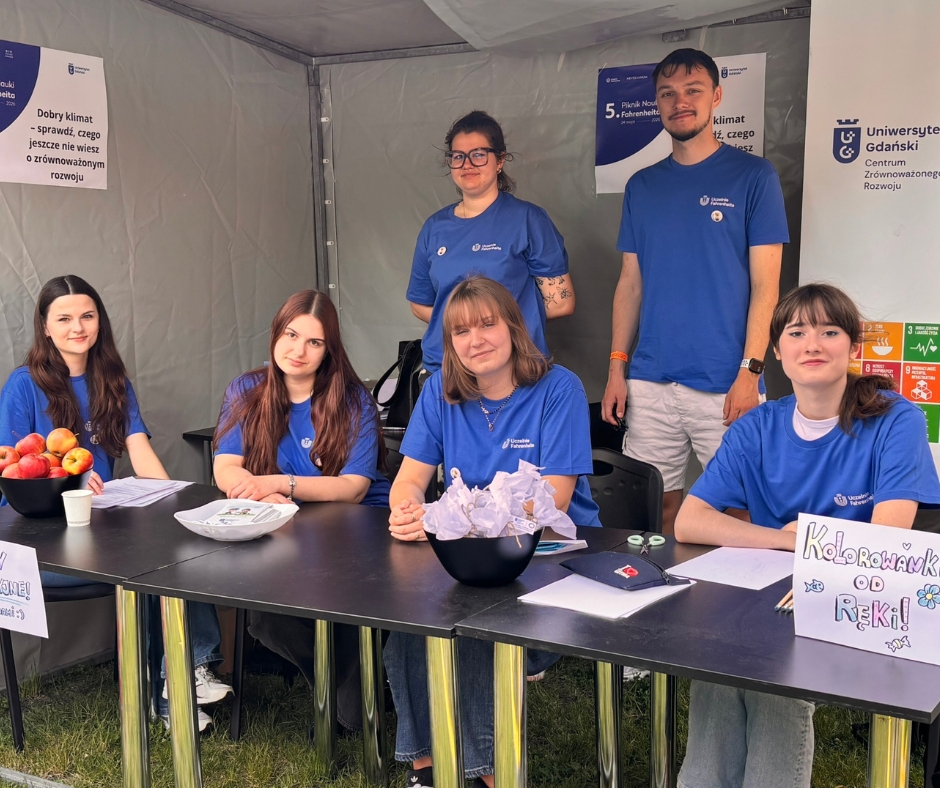
On Sunday, we attended the Fahrenheit Picnic on Gdańsk’s Góra Gradowa, which saw record attendance. With over 80 educational booths, a stage full of attractions, themed zones, and preventive health screenings—the organizers: the University of Gdańsk, Gdańsk University of Technology, Gdańsk Medical University (together forming the Fahrenheit Universities Association), and Hevelianum—put together a truly exceptional event. Our booth also attracted a lot of interest. Together with the students, we prepared quizzes and educational games with prizes for the Picnic guests, coloring pages created on-site upon request, as well as eco-friendly surprises. It was colorful, educational, healthy, and inspiring! Thank you to everyone for coming and spending time with us, and to the organizers for the invitation. See you next year!
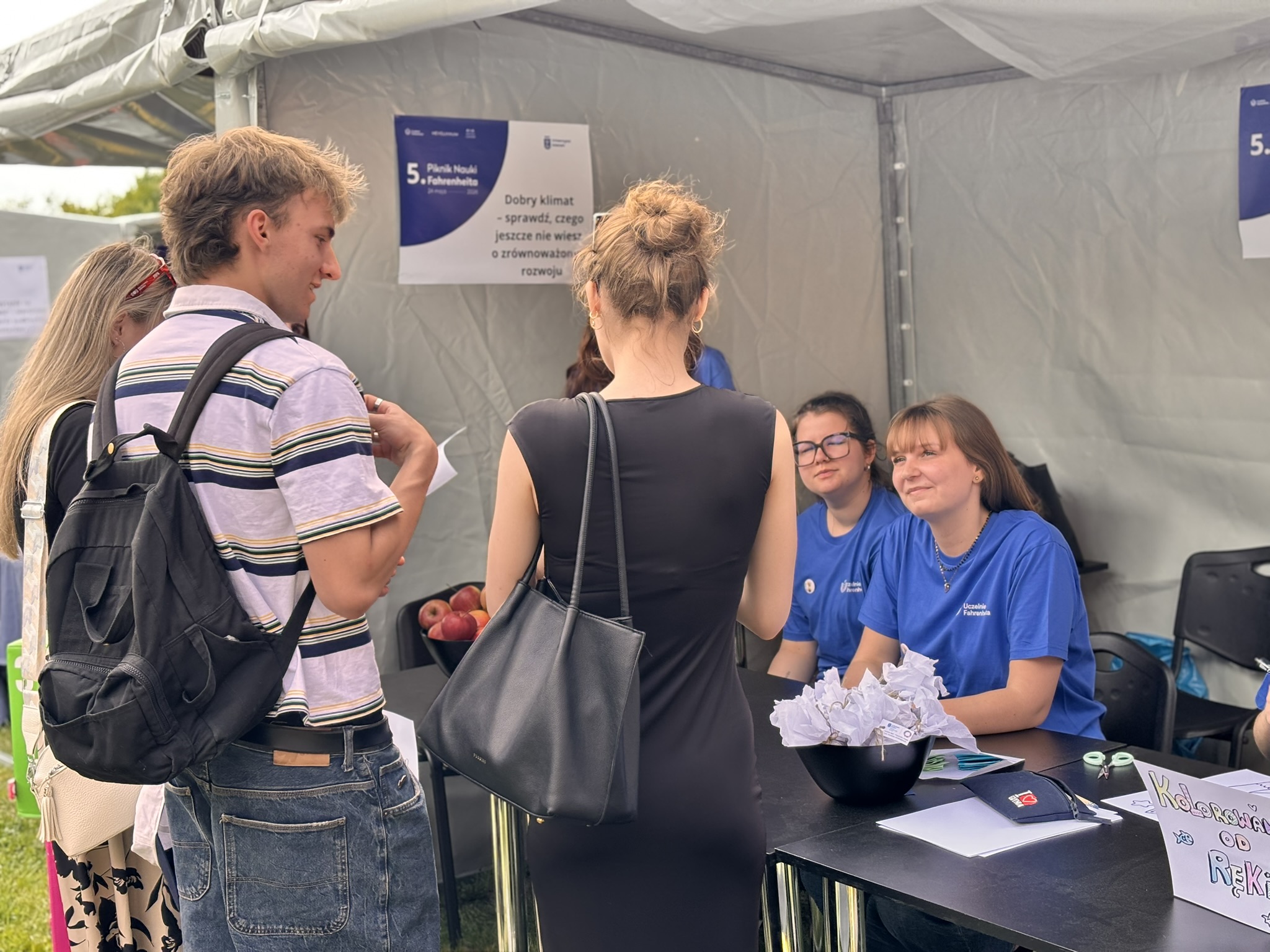
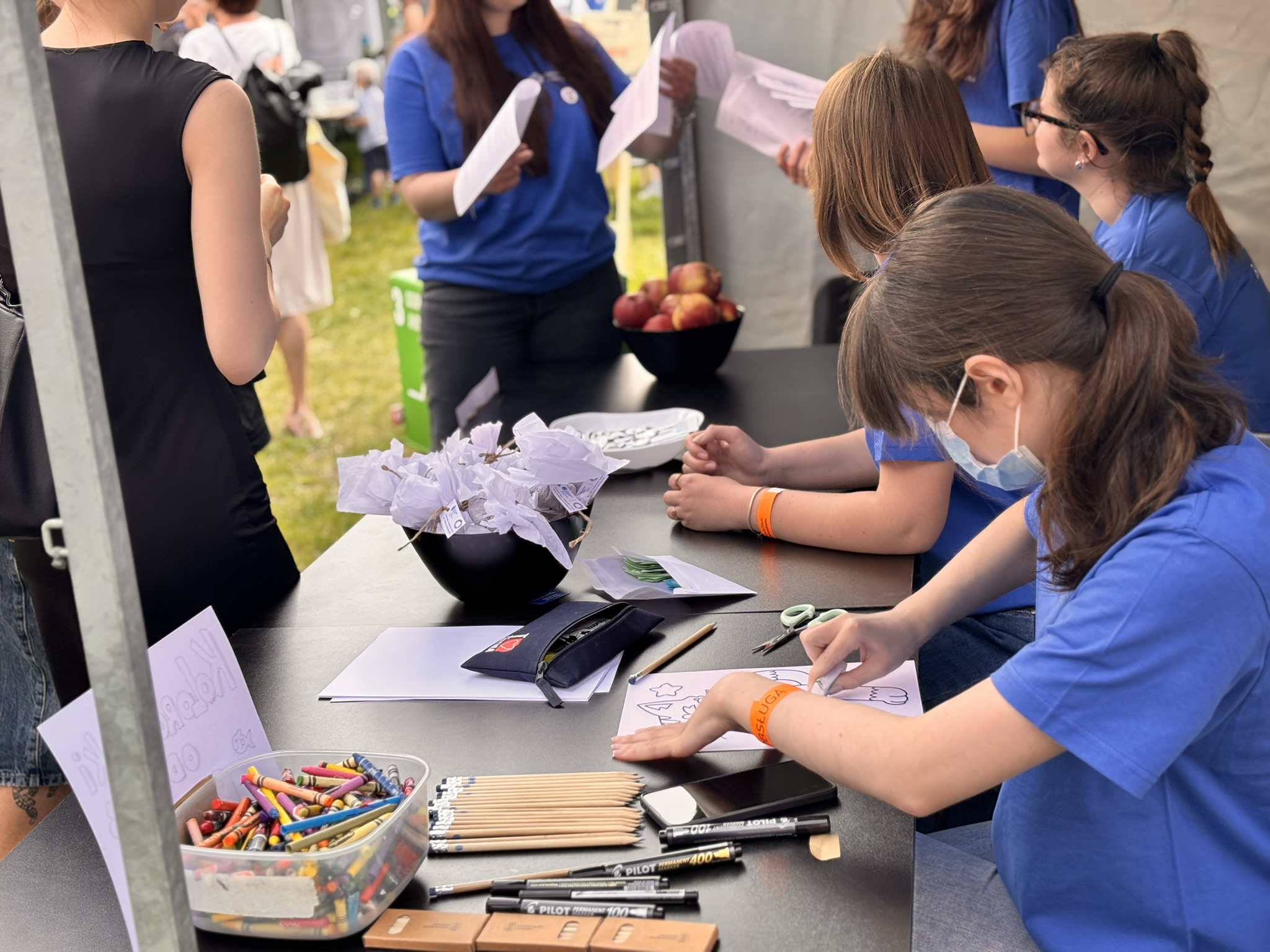
Below is a report prepared by Fahrenheit University (compiled by CKiP; photos by Gregmar).
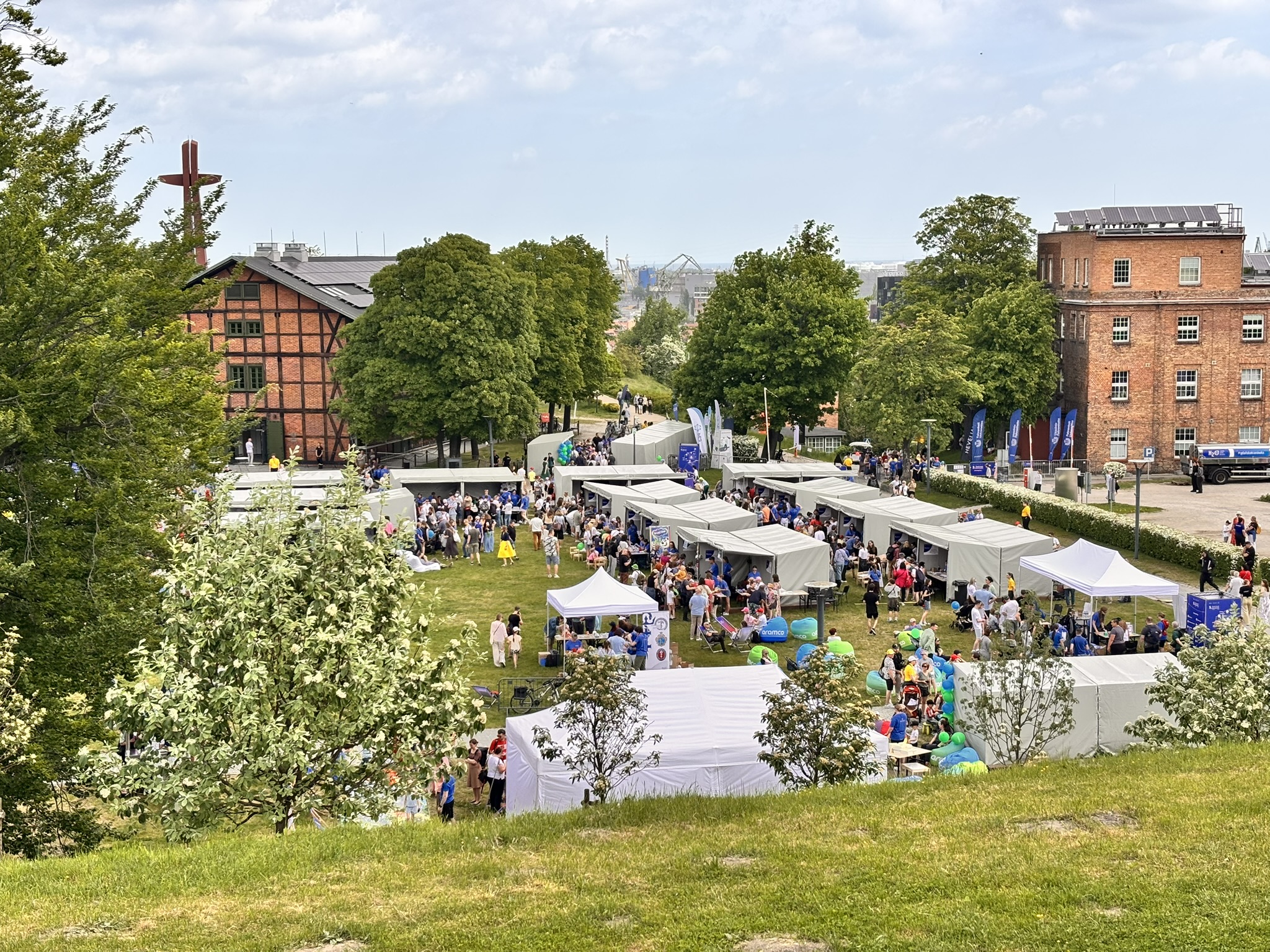
Over 80 educational booths, science demonstrations, experiments, workshops, sports activities – and thousands of visitors! That’s what the 5th Fahrenheit Science Picnic looked like, which we celebrated this year on May 24, the anniversary of FarU’s patron’s birthday. The event, organised jointly by The Fahrenheit Union of Universities in Gdańsk and Hevelianum, once again transformed Góra Gradowa into an open space for science, experimentation, and family exploration of the world. This year’s edition was accompanied by beautiful weather, a great atmosphere, and the energy of thousands of participants who spent time with their entire families among the scientific attractions.
The Picnic attracted residents from all over Pomerania – children, teenagers, students, families, seniors, and everyone who wanted to see science up close and discover that it can be fascinating, engaging, and accessible to everyone. What’s more, the Picnic was visited by a record-breaking – so far – crowd of over 6,000 people.
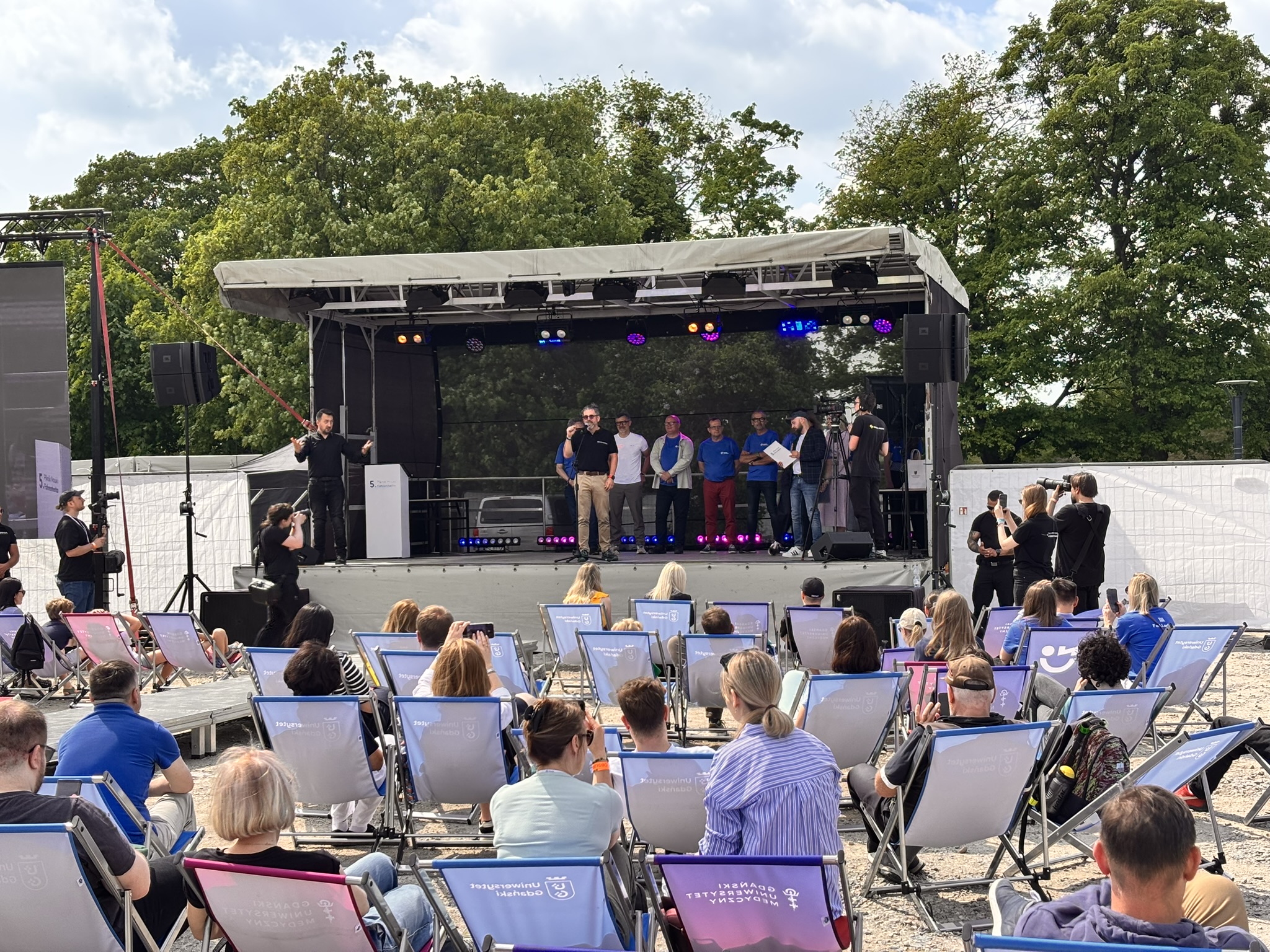
Picnic Stage
The event program began with a ceremonial opening attended by regional authorities, the rectors of Gdańsk’s universities, and the management of Hevelianum.
‘This is a unique celebration of Gdańsk’s science and an excellent opportunity to show that science doesn’t happen exclusively in laboratories, clinics, or research halls,’ said prof. Piotr Stepnowski, Rector of the University of Gdańsk and Chair of the Assembly of The Fahrenheit Union of Universities in Gdańsk, during the Picnic’s opening. ‘We want to share knowledge, answer questions, and inspire people to discover the world. I am glad that more universities are joining the initiative – today we are here together as five Gdańsk universities. With the Academy of Fine Arts and the Academy of Music joining us, the event is even more colourful, creative, and inspiring. Events like this show that science is close to people and influences our everyday lives.’
The stage attractions lasted all day. The audience listened to a panel of young people discussing studying in the age of overstimulation, watched the zero-waste fashion show “At Fahrenheit’s Birthday Party” (in which the Rectors also participated!), and listened to an interesting discussion on future technologies and the energy transition, prepared in collaboration with Polish Nuclear Power Plants.
‘Once again, we’ve proven that Gdańsk and Pomerania are alive with science. The success of this event is the result of excellent cooperation, the passion of scientists, the commitment of Hevelianum educators, and the incredible openness of our guests. We showed that science can be discussed with ease, inspiring others with passion,’ said Paweł Golak, director of Hevelianum. ‘Seeing entire families discovering the world of science together shows just how much such events are needed. Hevelianum has once again become a meeting place for curiosity, knowledge, and positive energy.’
The spectacular science shows were very popular, including the “Magic vs. Science” demonstration prepared by Hevelianum and “Energy-Driven Reaction” – a show produced in collaboration with Aramco Europe.
The stage also featured discussions on topics related to the future of the job market (presented by Invest in Pomerania), astronomy, first aid, and a presentation of the SolarHealthHub project – an example of a student idea that has been successfully implemented.
The Fahrenheit Universities Awards were presented, along with the ceremonial awarding of funds under the grant program of the Fahrenheit Union of Universities in Gdańsk and the investGDA Foundation. Stanisław Szultka, director of the Department of Economic Development at the Marshal’s Office of the Pomeranian Province, welcomed the recipients of the fourth edition of the scholarship program for international doctoral students.
Science Town
Throughout the day, participants could enjoy the attractions prepared at the Fahrenheit University Science Village (Medical University of Gdańsk, Gdańsk University of Technology, and the University of Gdańsk). The program included workshops, experiments, and demonstrations in the fields of medicine, the natural sciences, environmental sciences, and the humanities.
At the Medical University of Gdańsk booths, visitors could watch first aid demonstrations, undergo preventive health screenings, explore the world under a microscope, and participate in interactive workshops and quizzes highlighting the importance of preventive healthcare. Gdańsk University of Technology invited guests into the world of architecture, robotics, cybernetics, electronics, and materials of the future. A presentation of a race car prepared by students of the PGRacing Team drew significant interest. The University of Gdańsk organised a variety of workshops and experiments – ranging from the natural sciences to the humanities. Participants could take part in literary workshops, music therapy demonstrations, experiments, microscopic observations, or the creation of eco-cosmetics. There were also activities for those interested in economics and business.
Attractions in the Pythagoras Hall were particularly popular; there, visitors could undergo free preventive health screenings, including glucose, cholesterol, uric acid, and blood pressure tests. Specialists from the Medical University of Gdańsk provided advice on healthy lifestyles and preventive healthcare.
Various activity zones
The Toddler Zone featured entertainment, construction workshops, and eco-friendly games. The Local Government of the Pomeranian Province (a picnic partner) invited children and entire families to participate in the large-scale Spy Guy Pomorskie game, in which participants took on the roles of detectives exploring the Pomeranian Province through puzzles and the search for clues.
This was also the venue for the premiere of an educational children’s book on healthy eating habits, prepared in collaboration with Aramco Europe – the youngest picnic participants received it for free. Children also built vehicles from LEGO bricks and created colourful pipelines. Thanks to the ORLEN for Pomerania Foundation, they programmed ecoBOTS responsible for waste sorting. The picnic was full of little explorers who participated in workshops and experiments with great enthusiasm.
‘What I liked best was isolating DNA from an onion. I didn’t know you could see it with your own eyes!,’ said 7-year-old Maks, who was conducting such an experiment for the first time.
Experiments demonstrating how the human body works also generated plenty of excitement. Nine-year-old Zuzia tried to fish a coloured ball out of the water, symbolising kidney stones. “I learned that you have to drink a lot of water to avoid getting stones like that,” she said after completing the task.
There were many more stories like this during the picnic – the children had a great time and learned through experience, experimentation, and conversations with scientists and students.
Participants also enjoyed numerous attractions provided by the event’s partners. The ORLEN Foundation for Pomerania set up a road safety zone where visitors could test a rollover simulator, a crash simulator, an airbag deployment simulator, and a reaction time simulator. Participants could see traffic situations from a completely new perspective and discover why speed, combined with caution and attentiveness, is of the utmost importance.
A new feature of this year’s edition was a race track with remote-controlled F1 cars, prepared in collaboration with Aramco Europe. Fast turns, the thrill of racing, and modern technology attracted hundreds of automotive fans throughout the day, both younger and older.
Invest in Pomerania invited visitors to its zone dedicated to future skills, offshore energy, and the energy transition. Children built eco-friendly wind turbines, conducted experiments, and explored physical phenomena, while parents could discuss the job market and download a report on future skills.
Partners involved in ecology and modern energy also set up their own zones – Port Czystej Energii, Zakład Utylizacyjny, Gdańskie Wodociągi, GIWK, the Centre for Environmental Information and Education, and the Department of Ecology and Energy at the City of Gdańsk. Participants could take part in workshops, educational games, environmental activities, and technology demonstrations, all centred on environmental protection and the energy transition.
The 5th Fahrenheit Science Picnic was organised by the Fahrenheit Universities: Medical University of Gdańsk, GdańskTech (also the organiser of the concurrent Baltic Science Festival), and University of Gdańsk, as well as Hevelianum. Admission to the event was free.
The event’s partners were the Local Government of the Pomeranian Province and: Amberexpo, Invest in Pomerania Pomerania Development Agency, Aramco Europe, Polish Nuclear Power Plants, ORLEN Foundation for Pomerania, Center for Environmental Information and Education, Clean Energy Port, Department of Ecology and Energy of the Gdańsk City Hall, Gdańsk Water and Sewerage Infrastructure, Gdańsk Waterworks, Gdańsk Municipal Police, Gdańsk Waste Treatment Plant, and Gdańsk Sports Center.