

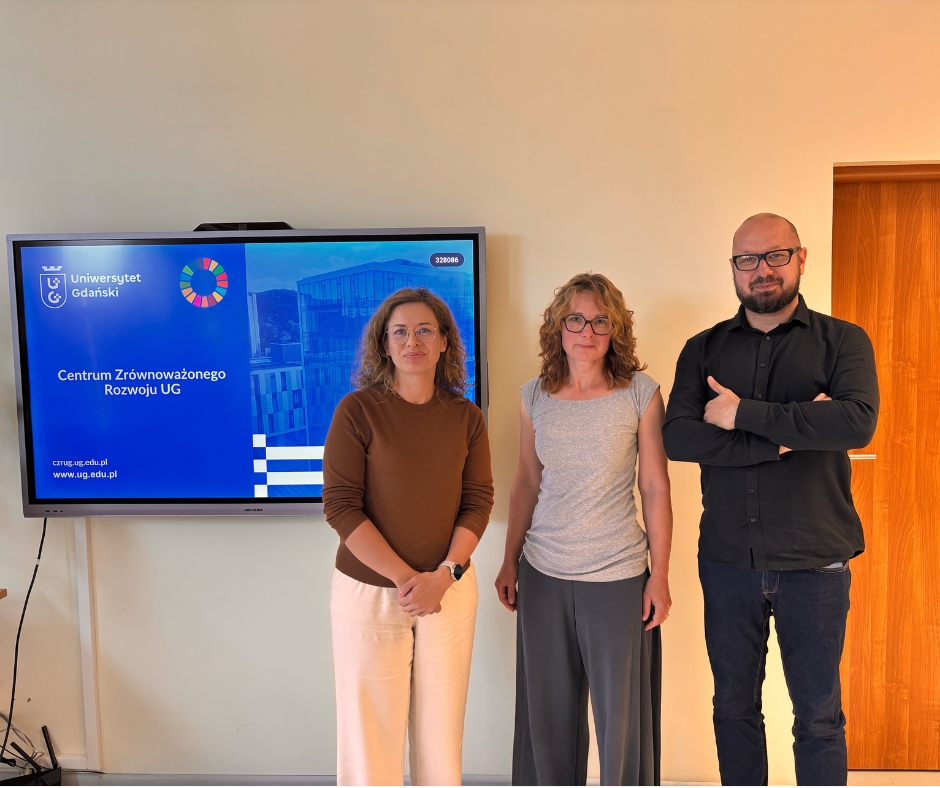
On 20 July 2026, a meeting was held at the headquarters of the Centre for Sustainable Development at the University of Gdańsk with Dr Karolina Wysocka, chair of the board and founder of the Lębork Social University Foundation. The discussion centred on opportunities for jointly promoting science and raising awareness of sustainable development in smaller towns across the Pomeranian Voivodeship.
For several years now, the Foundation has been organising the Lębork Science Meetings – a series of weekly, open popular science lectures featuring scientists and experts from various fields of knowledge. A committed community of participants, science enthusiasts and volunteers has formed around the initiative. The Foundation also collaborates with the local council, non-governmental organisations and secondary schools. Thanks to its partnership with NOT Lębork, the meetings take place in the unique setting of the medieval Square Tower.
During the discussion, the convergence of the two institutions’ missions was highlighted. The University of Gdańsk Centre for Sustainable Development promotes education for sustainable development and disseminates knowledge beyond the academic community. The Lębork Community University, meanwhile, brings scientific achievements to the residents of smaller towns, creating a space for meetings, discussions and the exchange of experiences.
The Centre for Sustainable Development at the University of Gdańsk (CZRUG) was represented at the meeting by: Monika Adamczuk, project manager; Dr Dawid Weisbrodt, coordinator of the Education for Sustainable Development Programme; and Szymon Gronowski, promotion specialist.
One of the areas of cooperation discussed was combining the academic and expert potential of the University of Gdańsk with the Foundation’s experience in organising events and reaching local audiences. The Centre could support the initiative with its expertise and contacts with researchers, whilst the Foundation would be responsible for organising the meetings and promoting them amongst the region’s residents.
The meeting provided an opportunity to exchange experiences and discuss initiatives that combine the potential of the academic community with the needs of local communities. Both parties expressed their willingness to continue discussions on specific forms of cooperation. The first joint activities are planned for the start of the new academic year.