

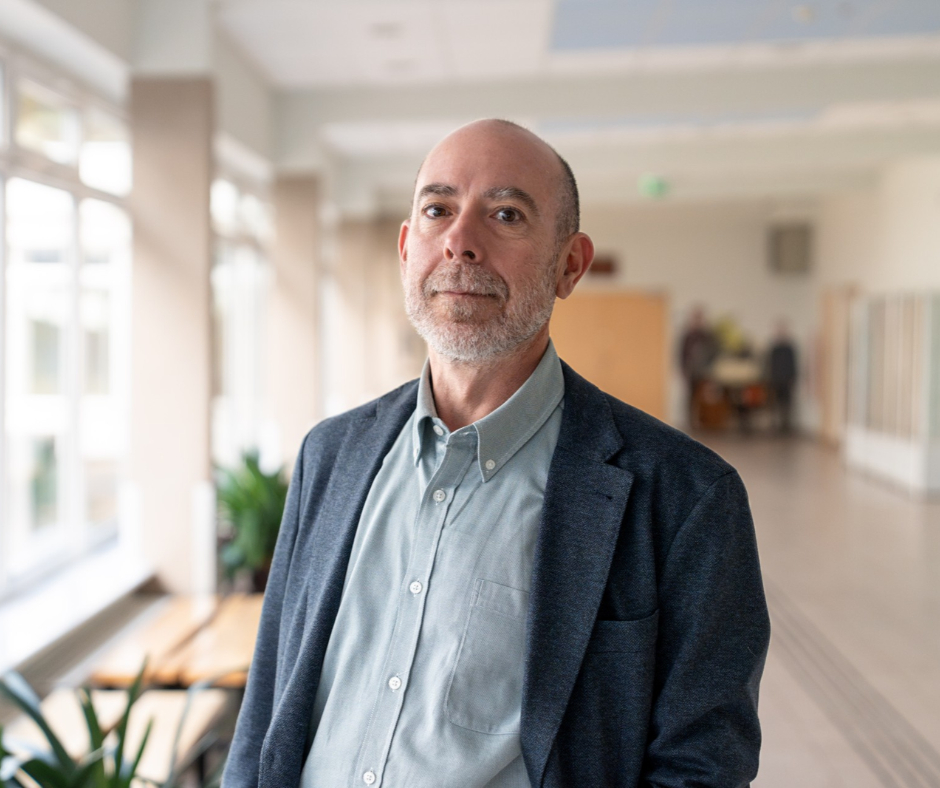
To ancient Romans, Lusitania seemed the end of the world. Even nowadays, this westernmost province of the Roman Empire seems underestimated, and its true value and impact on the Empire are just being discovered. Professor André Carneiro, currently visiting the Faculty of History, argues that this place is well worth not only a visit but also further archaeological research due to its uniqueness and significance – both for ancient Rome and for modern Portuguese culture.
Karolina Żuk-Wieczorkiewicz: – Your research focuses on – among all – ancient Lusitania, the westernmost part of the Roman Empire. How did you get interested in it? Is it somehow connected with a place you live in?
Prof. André Carneiro: – I graduated in archaeology in Lisbon. I always enjoyed the Roman period, but then I went to work in a small municipality in the back side of Portugal. I started to work in a very small scale, in a very specific territory. Then I realised that I needed to broaden my range of interests, so I started my PhD, studying a larger territory. I realised that Roman culture is much wider than what was happening in Italy or France. Roman culture spread throughout all the Mediterranean. So, I decided I needed a wider scale and started working in collaboration with colleagues from other universities, i.e. from the Netherlands, from the United Kingdom, from Italy, etc.
– As you have such a broad context of research now, can you tell what is special about Lusitania – compared to other provinces and places?
– It is very interesting to see that Lusitania was one of the most distant territories of the Roman Empire. It is located at the Atlantic façade, in the westernmost part of Europe. Professor Karol Kłodziński, who invited me to Gdańsk, works in North Africa, which is neighbouring territory to the Iberian Peninsula. For me, it’s very interesting to understand the specificities of the North African Roman settlements, Roman sites, and culture – and to compare them with what I know.
In terms of research, for me, it’s also very interesting to learn new ideas and new methodologies. Portugal is a peripheral country, and sometimes these new approaches don’t reach us, or they reach us with some delay. So, I try to understand how people work, what their logic and their specificities are, but also how I can adapt some of their ideas and methodologies to my circumstances.
Also, I’m an archaeologist, so I deal with material culture. But what interests me the most is the living culture of that period: how people worked, how they lived, how they died, what they ate, etc. I do not only want to show the materiality, but to tell stories about the things that we can discover.
– Investigating something that happened centuries ago seems challenging. What methods do you use? What do you do to reconstruct ancient people’s lives?
– That’s one of the areas in which archaeology has changed a lot within the last couple of decades. In the traditional perspective, we analyse the ceramics, the coins, the material culture, and try to interpret the elements from this point of analysis. Nowadays we have lots of tools that we can use. We can put these elements (like ceramics and coins) in laboratories and try to extract information from the scope of chemistry or physics.
However, I work mainly with the landscape, with the rural settlement. Some years ago, to discover new sites, I had to make a walk in the fields and try to see some remains lost in the landscape. Nowadays we have drones, we have the geo radar that allows us to understand what is underneath the surface without excavating. We have new technologies (including artificial intelligence) that allow us to create algorithms to try to understand what places are the most interesting for research or field works.
Of course, using these tools demands certain knowledge and competencies, and learning languages connected to other disciplines.
– It seems that collaboration between different disciplines is necessary in science.
– Yes, it is. Also, collaboration with colleagues from other fields and creating networks is one of the most interesting ways of advancing or creating new experiences, running projects, etc. As the project funding in archaeology is limited in Portugal, we need to be creative.
– I often think about the difference between what most people imagine (for example, what ordinary life looked like in antiquity) and archaeological or historical evidence. According to what you know or discovered, what does the evidence show about life in ancient Lusitania? In what ways is it different from what most people imagine?
– That’s a very interesting question. I often try to explain it to the students. My aim in coming here was to try to show that generally in archaeology and history, the explanations are usually based on “black and white” logic. We are used to the idea of something opposing something else. For instance, Lusitania was a province that was conquered by the Romans, so we traditionally see this opposition of the Romans facing and fighting the Lusitanians. However, this was the perspective of the Roman authors, because it was easier for them to name only one enemy. So, they referred to them as Lusitanians, yet they didn’t realise that local communities were very diverse. There were several groups, not a single community.
Such perspectives determine the way of perceiving and making history. We should remember that Lusitania, as located in the far western part of Europe, was always perceived as a territory of no particular interest. From Roman perspective, Lusitania was the place where the world ended.
– Do these perspectives affect archaeological research?
– Of course they do. For instance, Poland had lots of archaeological missions in Italy, in Greece, in the Middle East, in Egypt, or in Tunisia, but we have never had a Polish mission in Portugal. Iberian Peninsula didn’t seem interesting to Romans, nor does it seem interesting nowadays to those who study the history of ancient Rome.
– It seems then that we somehow repeat the narration of Romans?
– Yes! What I try to explain to the students is that when we start to work, we see that this binary view is not true. The evidence shows that the past is much more complex. For example, local communities of Lusitania were very diverse. Some of them came into contact with Phoenicians and Greeks, so they were more civilised. Others were more unstructured, but they also existed. As for the Romans, they did not merely wage wars. They also had diplomatic interventions, and their diplomacy acted on many levels.
So, the past is more complex than we generally understand – and this is fascinating.
– You said Lusitania was generally out of interest to an average Roman, yet Romans decided to conquer it. In your opinion, what in this province deserves our attention?
– What we see nowadays is that this province had its own richness, both cultural richness (because of the diversity of several tribes and people that existed there) and wealth in the literal sense of the word. Romans were attracted to Lusitania because Lusitania has its own resources: gold mines, which were exploited on a huge scale, and marble resources that were a very relevant production for the Roman Empire. We also find evidence for agricultural production and exploitation of marine resources (because the Romans enjoyed fish and fish sauces as food).
We also have lots of industrial complexes (like factories for ceramics) that people didn’t use to study some years ago, but nowadays we are starting to realise the true scale of the impact that Lusitania had on the Roman Empire. Maybe it was not the most relevant of the provinces, but it had its own investments and infrastructure, and something that most interests me: the heritage the Roman presence produced that is still alive.
– What elements of Roman heritage in Lusitania can we find nowadays?
– We have some traditions in Portugal that come from the Roman period. For example, main ingredients which are used nowadays in the Mediterranean diet (except potatoes or tomatoes, which came from America) were also used in the Roman Empire. What we eat in general is Roman legacy, because some of our traditional dishes come from the Roman period, like boiled or stewed meat, for example.
Also, the way we eat is similar. For instance, in Portugal, a moment of the meal is a moment to be with family, in community, with friends. We enjoy not only the food, but the way we eat. And this is the heritage of the Roman banquet.
– What other signs of Roman heritage do you find in Portugal?
– Well, we are superstitious in Portugal, like the Romans were. We have specific religious practices such as processions to holy sites in rural landscapes, where a deity is said to have appeared. We can still find these symbolic landscapes that are some kind of mixtures of human and divine intervention in some parts of Europe. And this is very Roman.
We can also find some other things which may seem insignificant, but they are important for local identity. For instance, wine that we produce in pots is also Roman legacy. In Rome, the city was the main element of spreading culture and disseminating the values of the empire – and we find these elements in public shows, in local festivities and events. So, we have lots of Roman identities and heritage in nowadays Portugal.
– According to your knowledge and research, how would you describe the way Romans settled in Lusitania? How was it conquered?
– It took the Romans 200 years to get the territory of Lusitania conquered and integrated with the Roman Empire. It’s a lot of time. In comparison, Germania was conquered in half a dozen years.
– Why?
– Romans didn’t find this territory interesting. They didn’t realise the potential of the resources in Lusitania until a later period. When they did, the process of conquest started to go more quickly – and that left lots of remains in our territory.
We have evidence of military camps, of siege sites, of strategic sites to control paths and routes, etc. Nowadays we are just starting to discover the true diversity of remains that Romans left, including sanctuaries and temples. Roman material heritage is far more than villas, which used to attract archaeologists the most.
– What was so special about villas?
– These huge estates were a characteristic element of the rural landscape. They were centres of economic life and agricultural activities. They were often massively built and beautifully decorated with mosaics, statues, sculptures or wall paintings.
They played a significant role, especially in Lusitania, as there were not so many cities there: around 30 or 40. This is probably the effect of topographical variation: there are slopes and hills, and plains, and river valleys – the landscape changes every few kilometres. So probably this territory was managed mostly by the villas that organised economic activities and social relationships, and they left lots of remains in the fields. Maybe our landscapes are not as monumental as those in Tunisia, but we still have some sites in Lusitania that are very impressive.
– What were the main differences between Lusitania and Tunisia in Roman times?
– Well, I think the historical process in both places is more or less the same: the Roman period, then the barbarian period, and then the Islamic conquests. But Tunisia had a civilisation that was already organised: the Carthaginians.
Prof. Karol Kłodziński: – It was also more urbanised. There were over 500 cities in Africa Proconsularis in Tunisia.
AC: – Yes, you can compare this number with 30 or 40 cities in Lusitania. Moreover, the territory of modern-day Tunisia is closest to the centre of the Mediterranean region, so it received more influences from everywhere. It was also very fertile. We don’t imagine Tunisia as a territory of great agricultural resources, but in the Roman period it was one of the main suppliers of grain and food to Rome. Lots of Romans immigrated to Tunisia to manage the estates, and this contributed to the distinct presence of Roman culture there. In contrast, in Lusitania, there was rather a blend of Roman culture with local cultures and identities.
Another difference concerns the remains. Professor Karol Kłodziński showed me a lot of impressive inscriptions in Tunisia which are still in the same place, in original context. In Lusitania, a lot of historical remains were destroyed or moved to museums. I suppose that for most archaeologists, it’s more exciting to find archaeological evidence in its original context. In Lusitania, we don’t experience that too often. But we still have a landscape marked with the Roman heritage.
– Is that heritage appreciated in Portugal?
– I think that the mindset is currently changing. Earlier, the idea of progress referred to creating new elements rather than incorporating the old ones. Archaeological discoveries were sometimes considered to cause problems (such as investment delays). Nowadays, that mindset is changing. These remains, this Roman heritage, are perceived to be a good way to attract tourists and thus help develop local businesses. For instance, I work with local agents and help them create products or cook meals inspired by Roman tradition.
We also notice a change in tourism: there are more visitors, especially from the north of Europe, who are deeply interested in ancient culture. They want to understand it, they want to see the Roman monument, the dolmen, or the ancient temple. They are more qualified and come in different seasons, not just in summer.
– What are your impressions of your stay in Poland and of your interactions with the students at the University of Gdańsk?
– Arriving here at Gdańsk, I didn’t have many expectations, but there are things that amazed me. This campus is magnificent; it is very well organised: the faculties, the buildings, the library in the central place, good rooms and auditoriums for teaching.
The students are well prepared and attentive. I can see that they incorporate knowledge, they think logically and make critical questions. They also speak English very well. Contact with them is very stimulating, and I learn from them as well. Especially PhD students ask a lot of intriguing questions. It is interesting to me to see how they think and how they incorporate some elements into their own research.
– You came to the University of Gdansk as part of the NAWA STER programme, focused on the internationalisation of doctoral programmes. What are your plans for future collaboration with Professor Karol Kłodziński and the Faculty of History?
KK: – We are thinking about joint projects involving André and, for example, me and my PhD student Wojciech Wierzbicki. We hope some students could participate in fieldwork and archaeological excavations in Portugal, and I hope that the Erasmus agreement could be signed between our faculties to facilitate future collaboration.
AC: – I think it’s relevant to say that my coming here was made possible by other colleagues. We have collaborations and networks in Portugal, in Poland, but also in Spain, in Hungary, in Greece, in the Netherlands. Such kind of network of colleagues and friends gives good perspectives for future mobility of researchers and students, and for international projects and publications.
I think that my stay in Gdansk is fruitful not only because of the lectures and contact with the students, but also because of improving and reinforcing collaborations that we already have.
Professor André Carneiro of the University of Évora (Portugal) is a Mediterranean archaeologist and ancient historian specialising in the history of Roman Lusitania. He visited the Faculty of History at the University of Gdańsk at the invitation of dr hab. Karol Kłodziński as part of the NAWA STER programme, which aims to provide systematic support for the internationalisation of Doctoral Schools.
Karolina Żuk-Wieczorkiewicz/CKiP