

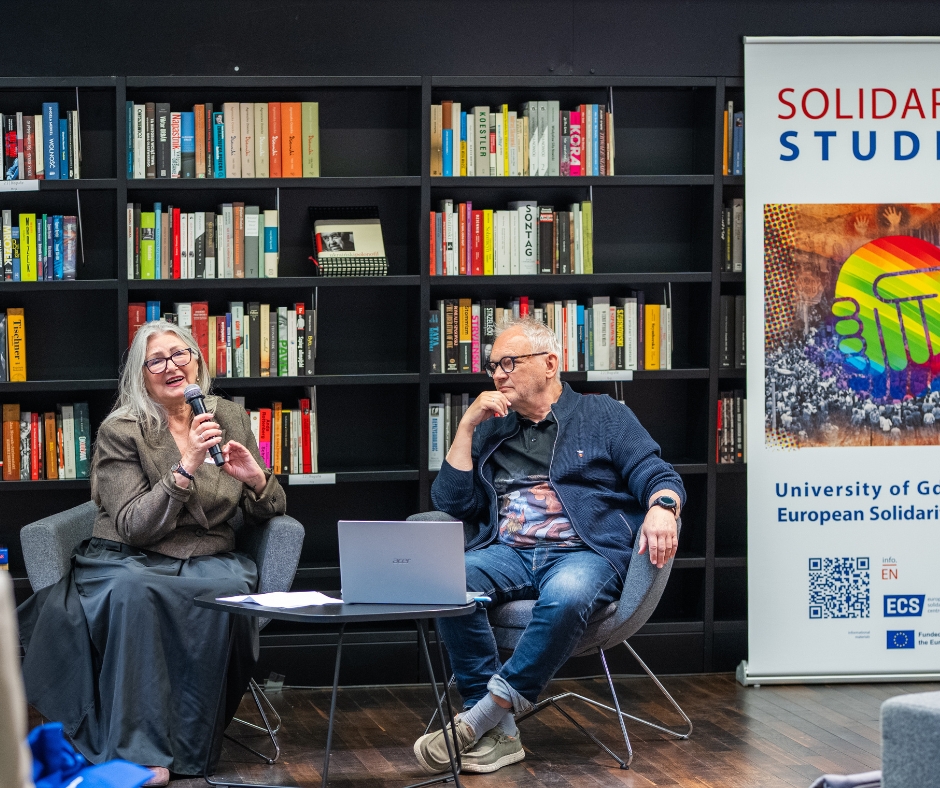
Examining the issue of conflict from multiple perspectives, solidarity as a means of overcoming crisis, and the practice of social resistance – these were the themes of the discussion at the international conference ‘SOLIDARITY IS/AS CONFLICT. Reassembling Art, the Political, and Education for a Common World’, which took place on 14–15 May 2026. The conference was accompanied by artistic events, which complemented the academic and social discourse with the language of art.
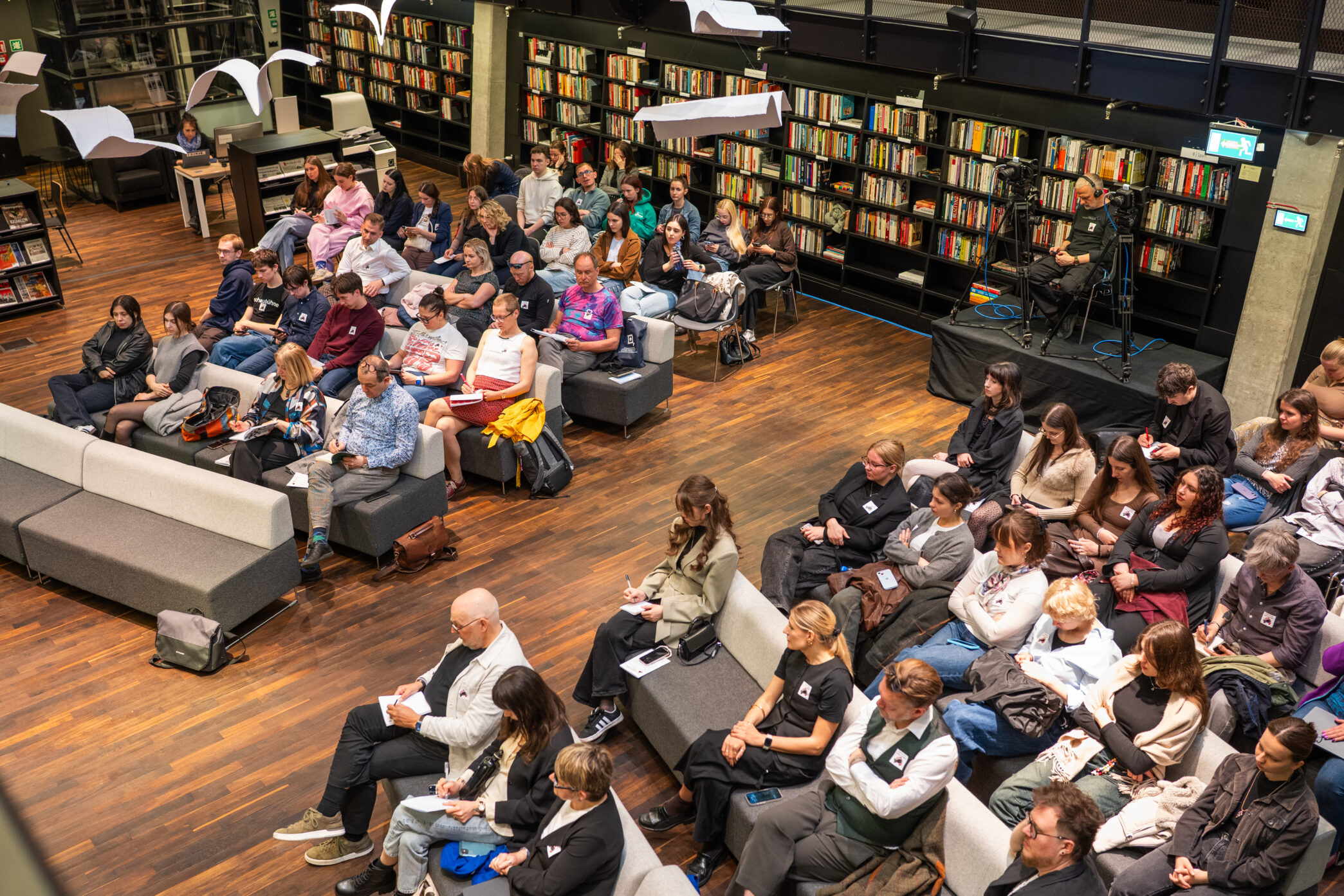
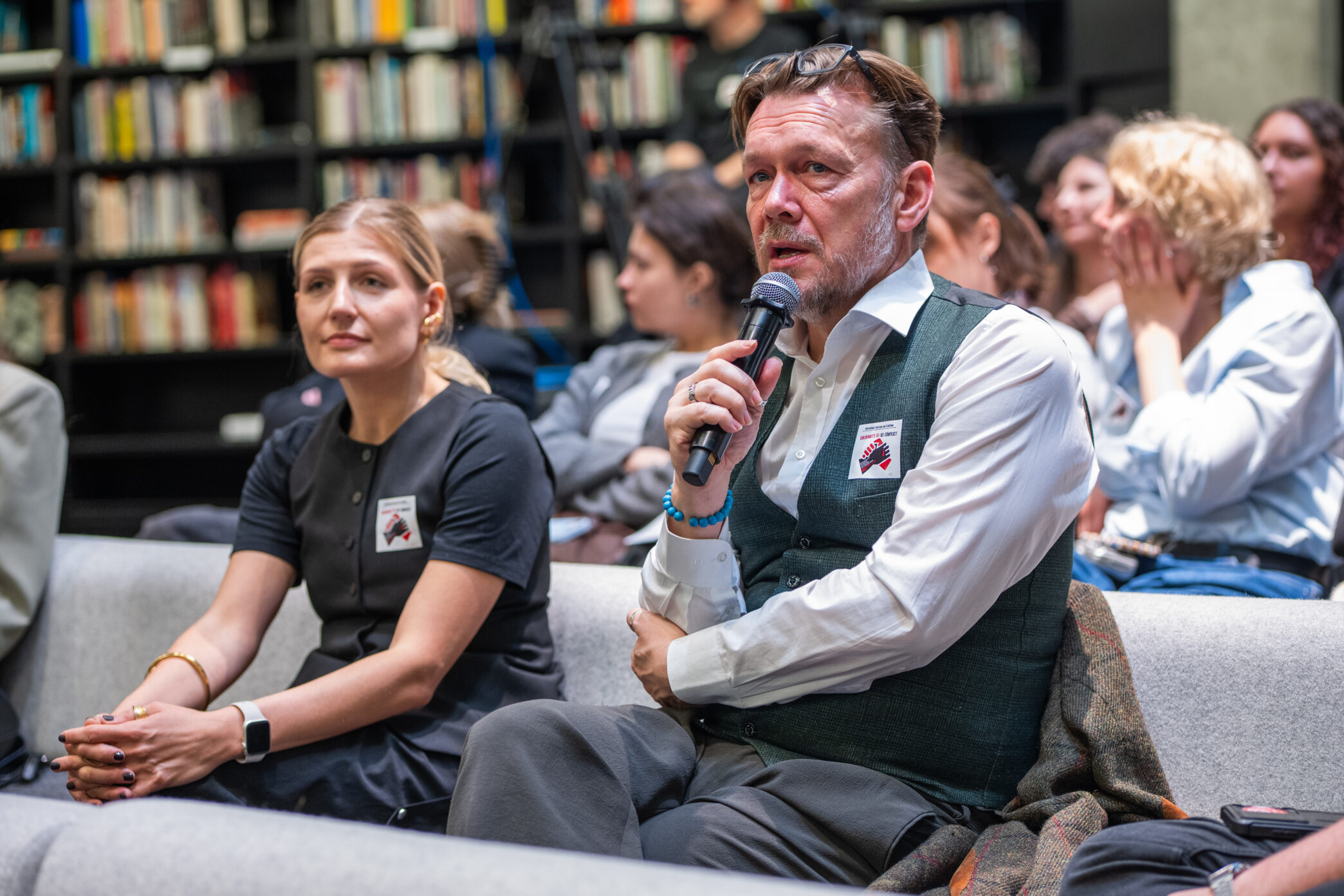
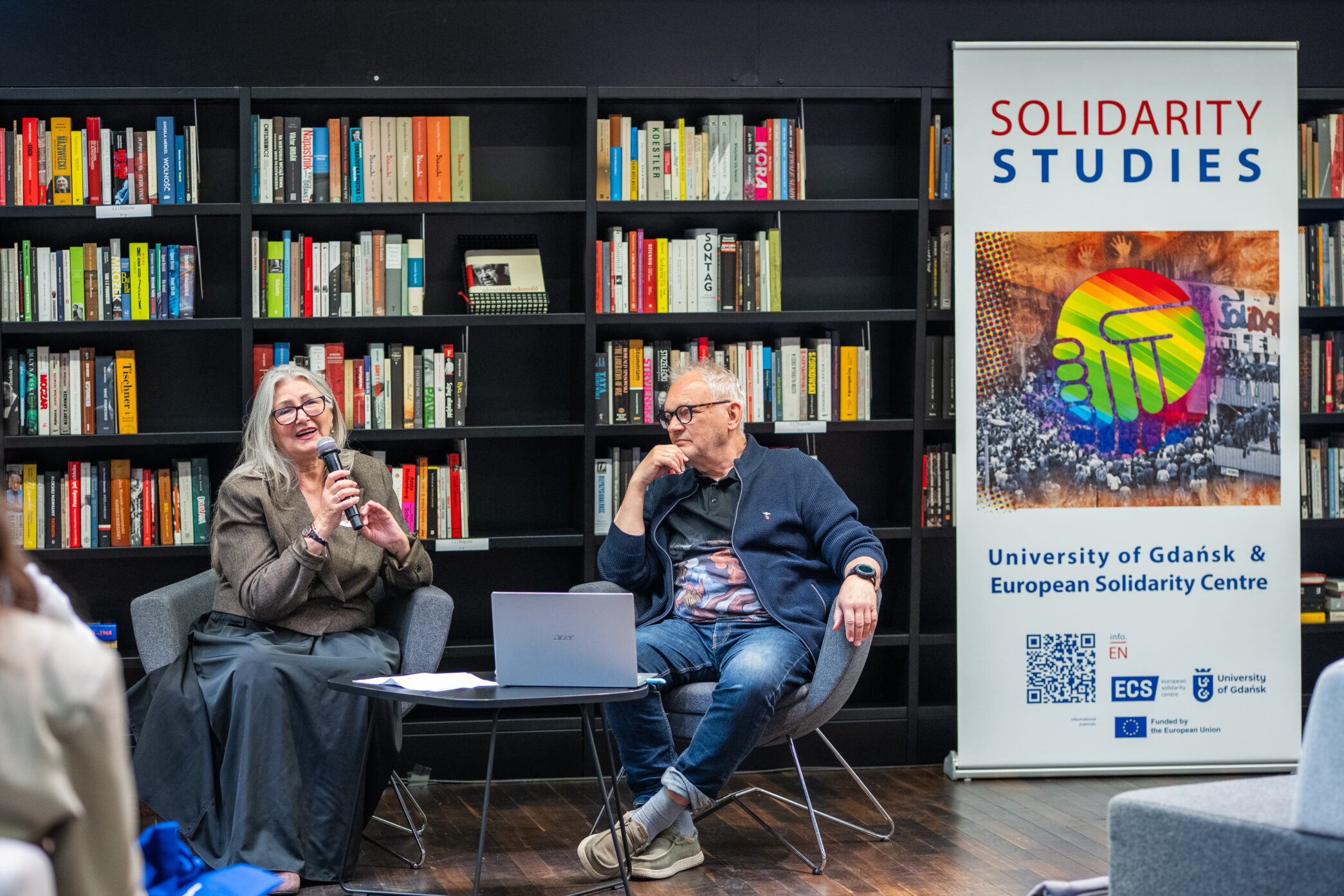
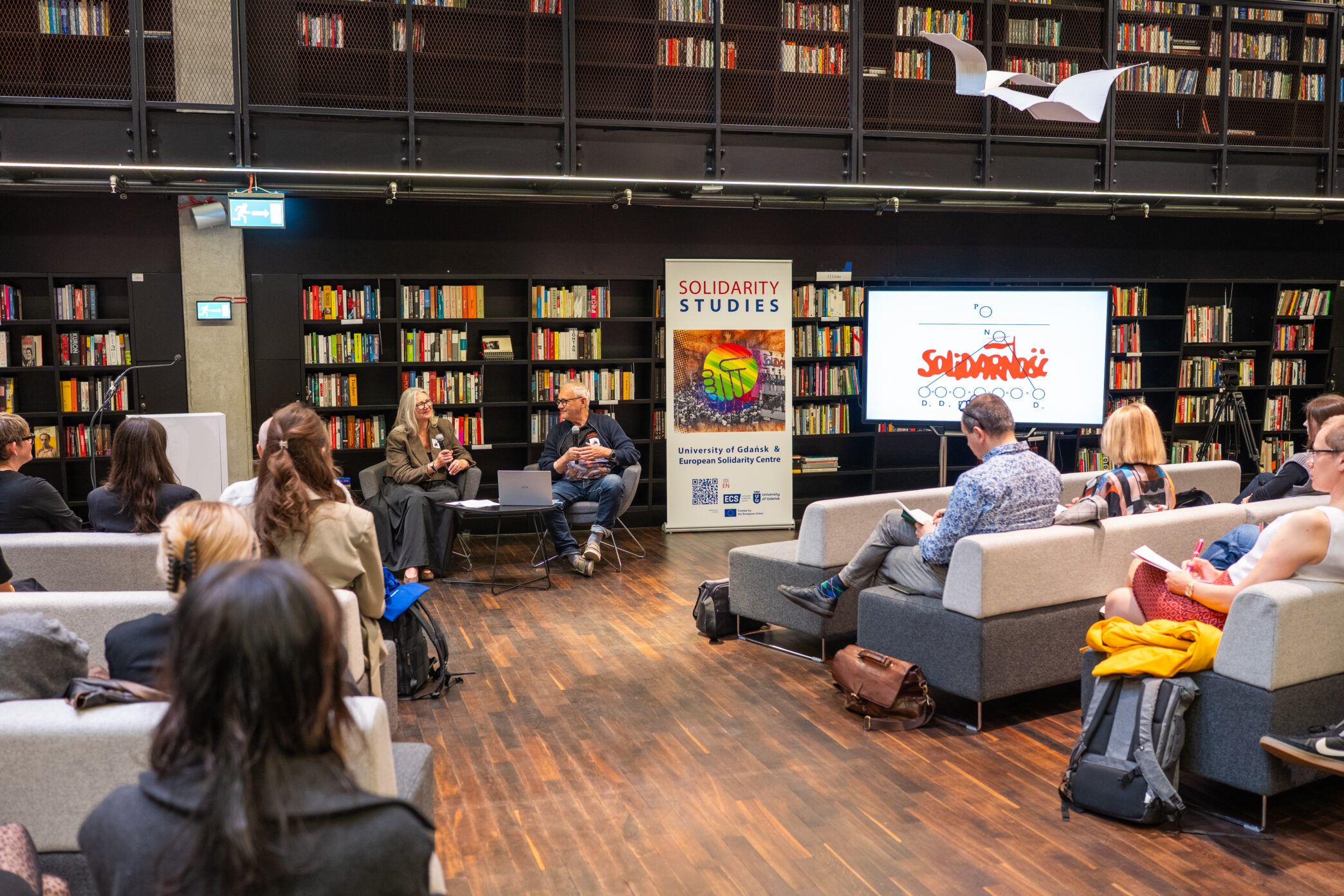
Photo: Rafał Mielczarek
The first day of the conference began at the European Solidarity Centre with the official opening and a panel discussion outlining the conference’s objectives, chaired by Prof. Maria Mendel and Prof. Tomasz Szkudlarek. The discussions centred on the question of how solidarity can become a form of resistance and a response to contemporary social, political and environmental conflicts.
Below we publish a post-conference commentary by Prof. Maria Mendel:
“For many years, Gdańsk has been associated with solidarity, and the city’s identity has been shaped around the tradition of linking the idea of freedom with solidarity against oppressive rulers – kings, governments, systems (such as the communist one). Since the tenure of Mayor Paweł Adamowicz (from 1994), the city’s official slogan has been ‘Gdańsk: the city of freedom and solidarity’. In this city, it makes perfect sense to think of solidarity as conflict: as a relationship based on and responsive to conflict, as an attitude that requires recognising and engaging with conflict, as stepping out of line to stand with those who need recognition and whose demands are justifiable. In this context, let us note that in the word ‘conflict’, derived from the Latin ‘conflictus’, the prefix ‘con’ is significant, meaning ‘with’, indicating that conflict is not something that can be resolved alone. Conflict is social and—although it may seem strange—it unites, not divides.
That is why we organised this conference in Gdańsk and why researchers from the Studies on Conflict, Art, and the Political in Education (SCAPE) network were delighted to travel here from Canada, the Netherlands and Sweden. Many students and doctoral candidates from several European countries, participating in the Erasmus+ programme, also attended. We gathered a large group of nearly 100 people.
Gdańsk, together with the University of Gdańsk and the European Solidarity Centre – co-organisers of the conference – is also home to a newly established master’s programme: Solidarity Studies. This promising programme begins in October this year, and this conference marks its launch ( https://rekrutacja.ug.edu.pl/en/blog/kierunek/solidarity-studies-2/ ).”
The first plenary lecture, entitled ‘Art, Relation and Pedagogical Processes in the Metacrisis’, was delivered by Prof. Sharon Todd from Maynooth University in Ireland. The speaker analysed the role of art in the era of the multidimensional crisis of the present day, highlighting the importance of interpersonal and non-human relationships, as well as the pedagogical potential of artistic practices in building solidarity.
This was followed by a lecture entitled “Solidarity is Leaning Out to the Other” by Dr Jacek Kołtan from the European Solidarity Centre and the University of Gdańsk. He presented a historical and philosophical analysis of the concept of solidarity, proposing an understanding of it as ‘leaning out towards the Other’ – an openness to diversity, otherness and dialogue that transcends one’s own perspective. The presentation was followed by a tour of the European Solidarity Centre’s permanent exhibition ‘Paths to Freedom’.
The afternoon session was opened by a lecture by Prof. Rick Dolphijn from Utrecht University entitled ‘The Philosophy of Land: Realising More-Than-Human Chains of Equivalence’. The speaker presented a posthumanist perspective on solidarity, analysing the relationships between people, the natural environment and the non-human world, as well as the role of spaces such as wetlands, deltas and islands in building new forms of community.
The first day of the conference concluded with the opening of the exhibition “Solidarity as Conflict” at the WL4 Przestrzeń Sztuki gallery. The exhibition was curated by Prof. Adriana Majdzińska from the Academy of Fine Arts in Gdańsk. The exhibition showcased works selected through an open call aimed at professional artists and art students, addressing the themes of solidarity, conflict and social engagement.
The second day of the conference took place at the University of Gdańsk Museum. Participants began the day with a tour of the museum’s exhibitions, accompanied by the Director of the University of Gdańsk Museum, Marta Szaszkiewicz-Sawa.
This was followed by a panel discussion entitled “Conviviality as New Solidarity: More-Than-Human Tables and Markets”, moderated by Dr Irena Chawrilska. Prof. Rick Dolphijn and Blanka Byrwa took part in the discussion. The conversation centred on new forms of solidarity extending beyond human relationships, with particular emphasis on communities formed around food, local ecosystems and sustainable social practices.
Dr Irena Chawrilska, programme coordinator of the More-than-Human Studies Lab at the Centre for Sustainable Development, emphasises that it seems particularly important today to think about solidarity not only in human terms, but also in more-than-human terms — taking into account the environment, other species and the complex relationships that shape us:
“It is worth remembering that solidarity has never been something easy or obvious. Historically, it emerged from resistance and opposition to injustice — it was always “against” something. Therefore, even today it does not lead a simple path to harmony or imagined symbiosis, but rather requires grappling with tensions and differences.
The panel I was honored to moderate tried to capture this complexity by examining solidarity from the perspective of conviviality — as a practice of being together despite differences, in which conflict does not disappear but becomes part of shared life and action,” she emphasises.
The next plenary lecture, entitled ‘Reimagining Solidarity: a Pedagogy of Cohabitation with Alterity’, was delivered by Dr Juliette Bertoldo. The speaker presented the concept of interspecies solidarity, emphasising the importance of education, art and mindfulness in building relationships with non-human forms of life and developing an ethic of care.
In his talk “Thanks, but no thanks! On the Nature of Resistance/Resistance as an Event of Education”, Prof. Carl Anders Säfström analysed resistance as a fundamental dimension of education and democracy. He pointed out that both education and art constitute spaces for opposition to inequality and tools for building a more just society.
Another key item on the programme was the panel ‘Social Propaganda Workshop: the Graphic Symbol as a Tool of Indoctrination’, during which Prof. Jacek Staniszewski and Dr Edyta Majewska-Rosińska from the Academy of Fine Arts in Gdańsk discussed the role of visual symbols, posters and graphic design in the processes of social communication, persuasion and ideological influence.
Following the session summarising the proceedings, participants attended an artistic lecture by Dr Vahram Mkhitaryan entitled “The Theory of Everything – The Dramaturgy of Conflict”. The author analysed conflict as a universal principle organising reality and a fundamental element of film dramaturgy, combining philosophical, scientific and artistic reflection.
The conference culminated in the performance ‘Chaos’ by Aurora Lubos, presented on 16 May in the WL4 space. The artist drew on experiences of crisis, violence and social uncertainty, using the language of performance to reflect on contemporary forms of conflict and the possibility of building solidarity in a world marked by multiple crises.
Video of the event:
Solidarity Studies
Te wyjątkowe studia są przeznaczone dla osób pragnących zdobyć wiedzę, umiejętności i kompetencje, które pozwolą im nie tyle dostosowywać się do aktualnie gwałtownych zmian społecznych, gospodarczych, klimatycznych i innych, co wspólnie przezwyciężać je jako sytuacje kryzysowe. Kluczem w tym jest solidarność, która jako praktykowana wartość odpowiada na potrzeby współczesnej rzeczywistości. Informacje o rekrutacji.