


The Baltic Nuclear Energy Forum is a conference bringing together experts, scientists and practitioners in the field of nuclear energy. It provides a platform for the exchange of experiences and discussion of the latest trends in the sector. This year’s second edition of BNEF took place on 18–20 March 2025 at the European Solidarity Centre in Gdańsk. The event was organised by the Business for Climate Foundation, Fahrenheit Universities and UN Global Compact Network Poland.

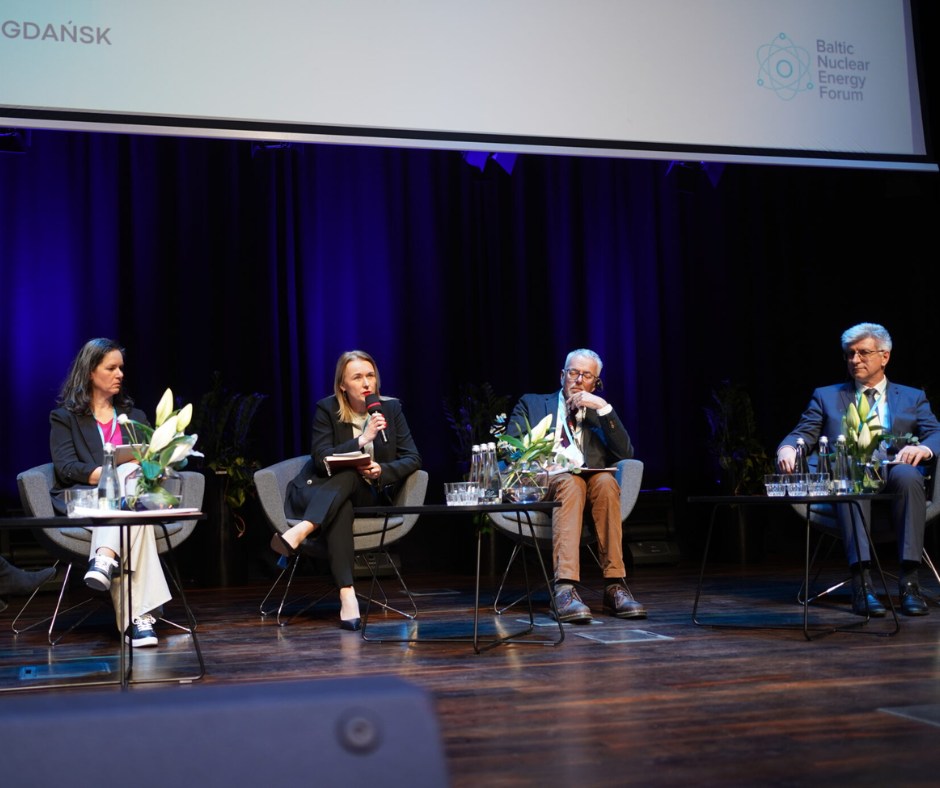
On 19 March 2025, the Centre for Sustainable Development, together with the Pomeranian Regional Planning Office, co-organised Panel 10 entitled ‘Dialogue without secrets. Neighbourhood of a nuclear power plant: knowledge, benefits, challenges’. The meeting was moderated by Monika Adamczuk (CZRUG), and the participants included: Dr hab. Sylwia Mrozowska, Prof. UG, Rector’s Representative for Cooperation with the Nuclear Sector, Dr hab. Dagmara Strumińska-Parulska, Prof. UG, Laboratory of Toxicology and Radiation Protection, UG, Meritxell Martell Lamolla and Csaba Dohóczki from the Group of European Municipalities with Nuclear Facilities, and Doug Bamsey, chair of the community forums at the Hinkley Point C power plant.
The panel guests emphasised the crucial importance of effective, tailored communication, conducted in a continuous and transparent manner, in the process of building a nuclear power plant. It is particularly important that information reaches local communities through channels that are natural and trusted, such as local media, meeting places and neighbourhood initiatives. Experts commented that public trust can be lost very quickly, and rebuilding it is a difficult and lengthy process, especially in the context of a long-term investment process such as the construction of a nuclear power plant.
The participants in the discussion emphasised that there is a great need to involve a variety of stakeholder groups, from local authorities and entrepreneurs to residents. The need to support local entrepreneurship and create tools that will enable local communities to benefit in real terms during all stages of the construction of a nuclear power plant was also pointed out. Particular attention was paid to so-called local content, i.e. the maximum use of local resources, which can translate into economic growth and social support for the investment. The panellists also discussed the importance of landscape and cultural heritage – local communities are strongly attached to their surroundings and expect their lifestyle and sense of identity to be respected. Residents want to be seen as hosts of the area, not as passive observers of change.
In conclusion, participants agreed that dialogue and cooperation are key – only by going through the investment process together, with respect for local values, can its success and public acceptance be ensured.