

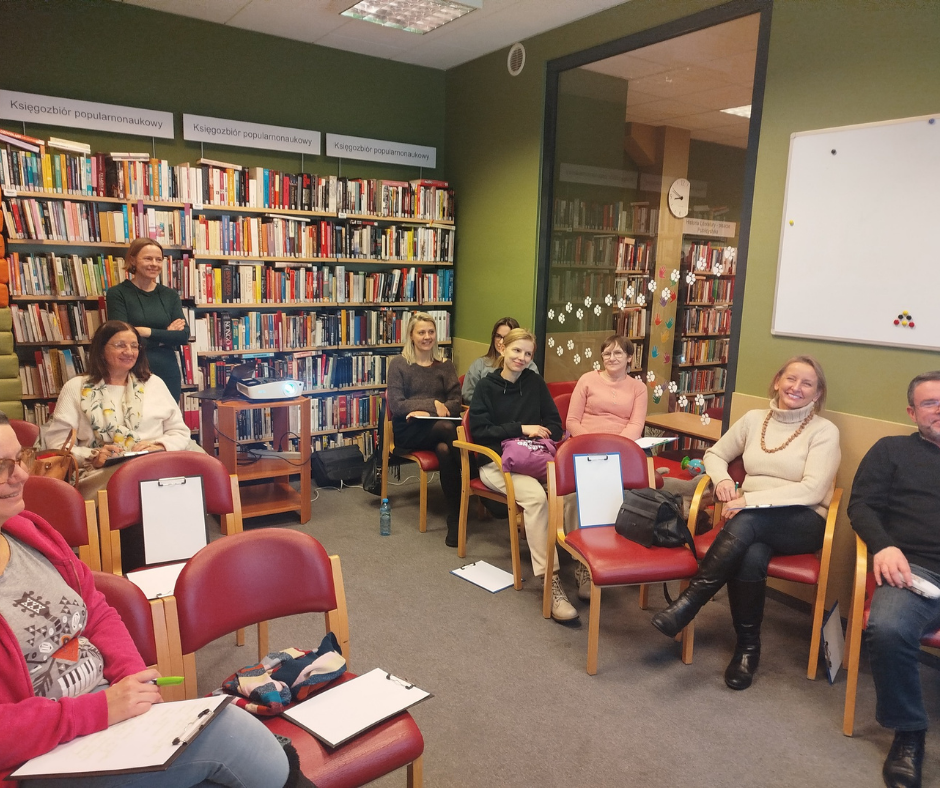
The next workshop meetings in the series on the symptoms, treatment and daily functioning of people living with endometriosis were held in January at the Center for Sustainable Development and the Library under the Cat and Mouse.
On January 14, the Cat and Mouse Library hosted Dr. Elżbieta Czapka, coordinator of the Quality of Life and Health program of the UG Sustainability Center, who led a workshop entitled. “Endometriosis – facts and myths”.
– The meeting was attended by people who, for various reasons, had a keen interest in the topic of endometriosis – a disease that requires life management strategies, not just drug treatment, Dr. Elzbieta Czapka emphasized. – We thank the Cat and Mouse Library for addressing such socially relevant topics.
Another meeting was held on January 19 at the headquarters of the Center for Sustainable Development at the Faculty of Social Sciences of the University of Gdansk. The workshop, at the invitation of Dr. Elzbieta Czapka, was led by Malgorzata Treppner – a psychologist and doctoral student at the UG Doctoral School, pursuing a research project on the psychological aspects of endometriosis.
– During the meeting, I focused on the psychological aspects of functioning of women with endometriosis, in particular the impact of chronic disease on emotions, interpersonal relationships and sense of identity, says Malgorzata Treppner. – I discussed the most common psychological and adaptive challenges accompanying the disease, as well as the importance of considering psychological factors in the treatment process and supporting patients.
An important element of the workshop was working on coping with chronic pain and developing self-compassion as a regulatory resource to support psychological well-being. Participants took part in an exercise called “Map My Body with Tenderness,” aimed at building a kinder relationship with their own bodies.
The topic of illness narratives and their impact on emotional functioning was also addressed. As part of the “Change your perspective – on narrative” exercise, participants worked on identifying ruminations and catastrophizing tendencies, and on transforming personal stories about illness into more adaptive, supportive narratives.
The workshop is being implemented as part of the Center for Sustainable Development’s Quality of Life and Health program, coordinated by Dr. Elizabeth Czapka. The next meetings are scheduled for March. More information coming soon.