

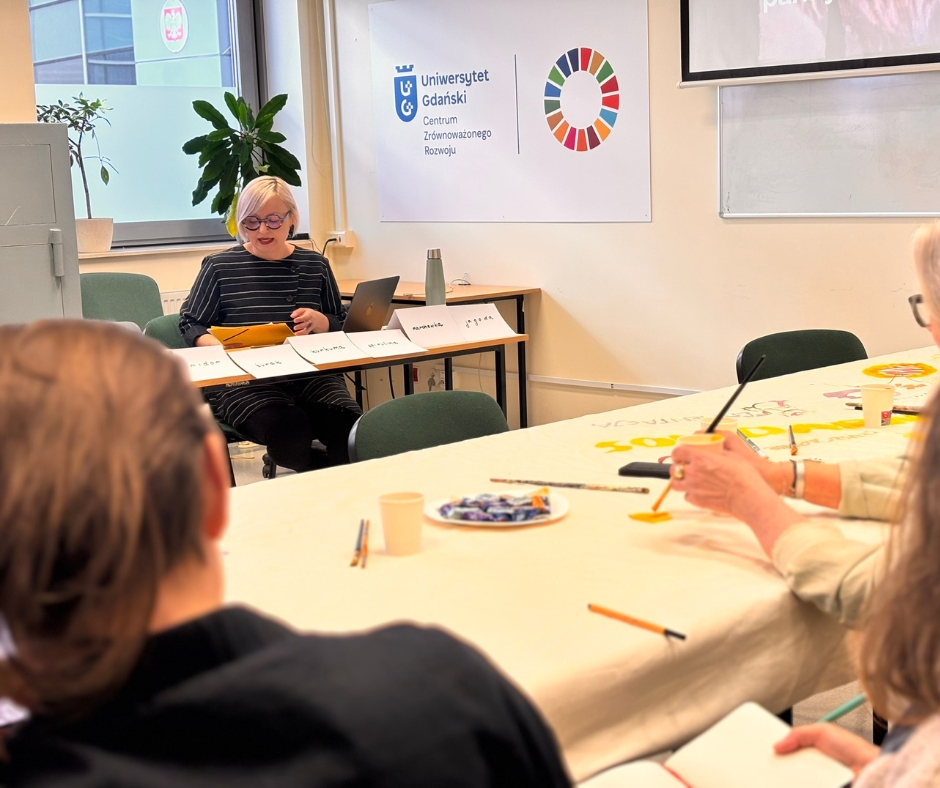
On April 17, 2026, the second meeting in the series “More-than-human Solidarities” took place at the headquarters of the Center for Sustainable Development at the University of Gdańsk, within the Faculty of Social Sciences. This time, the focus was on the category of scale—understood as a way of thinking, feeling, and creating in the face of the complexity of the more-than-human world.
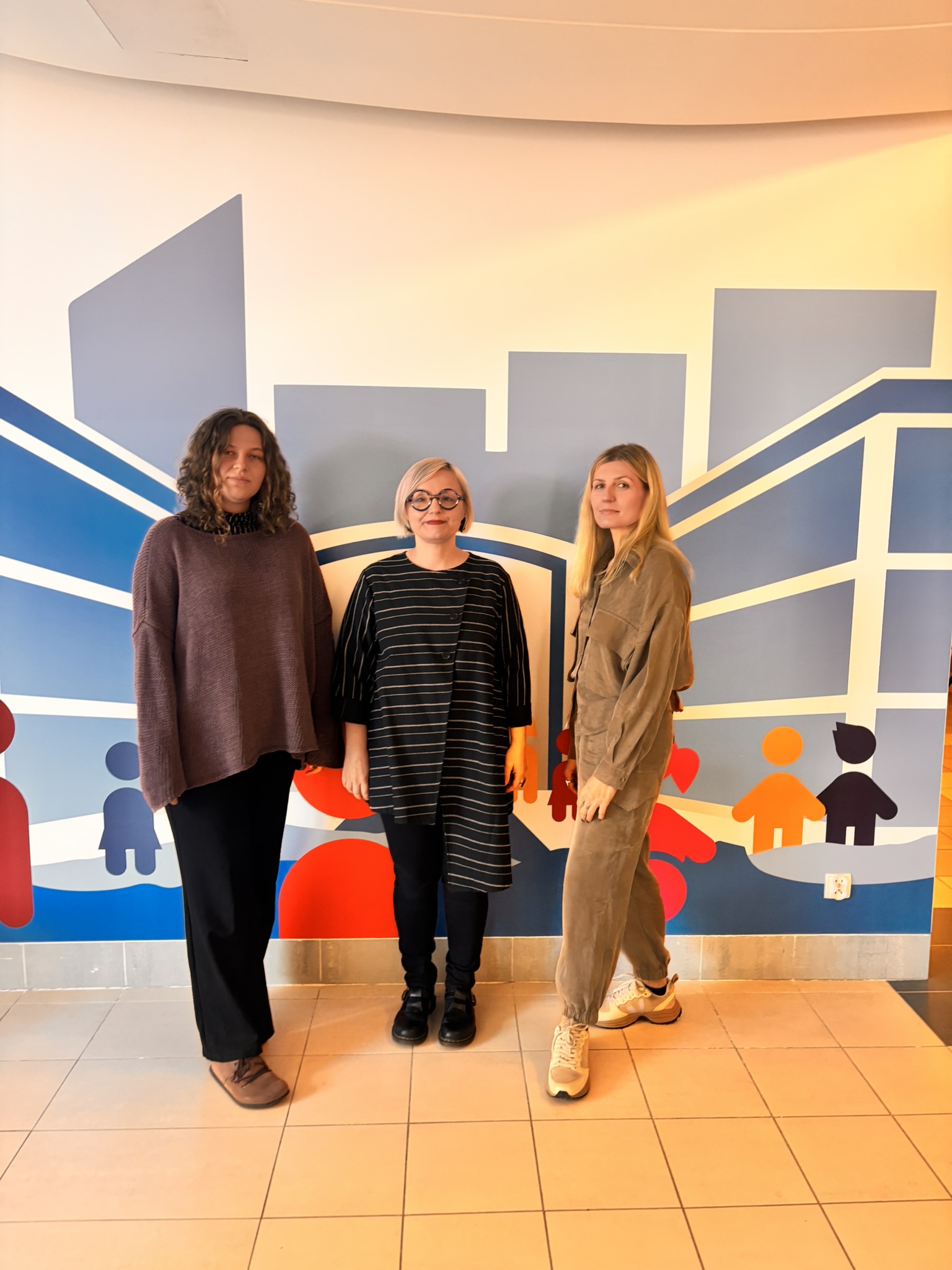
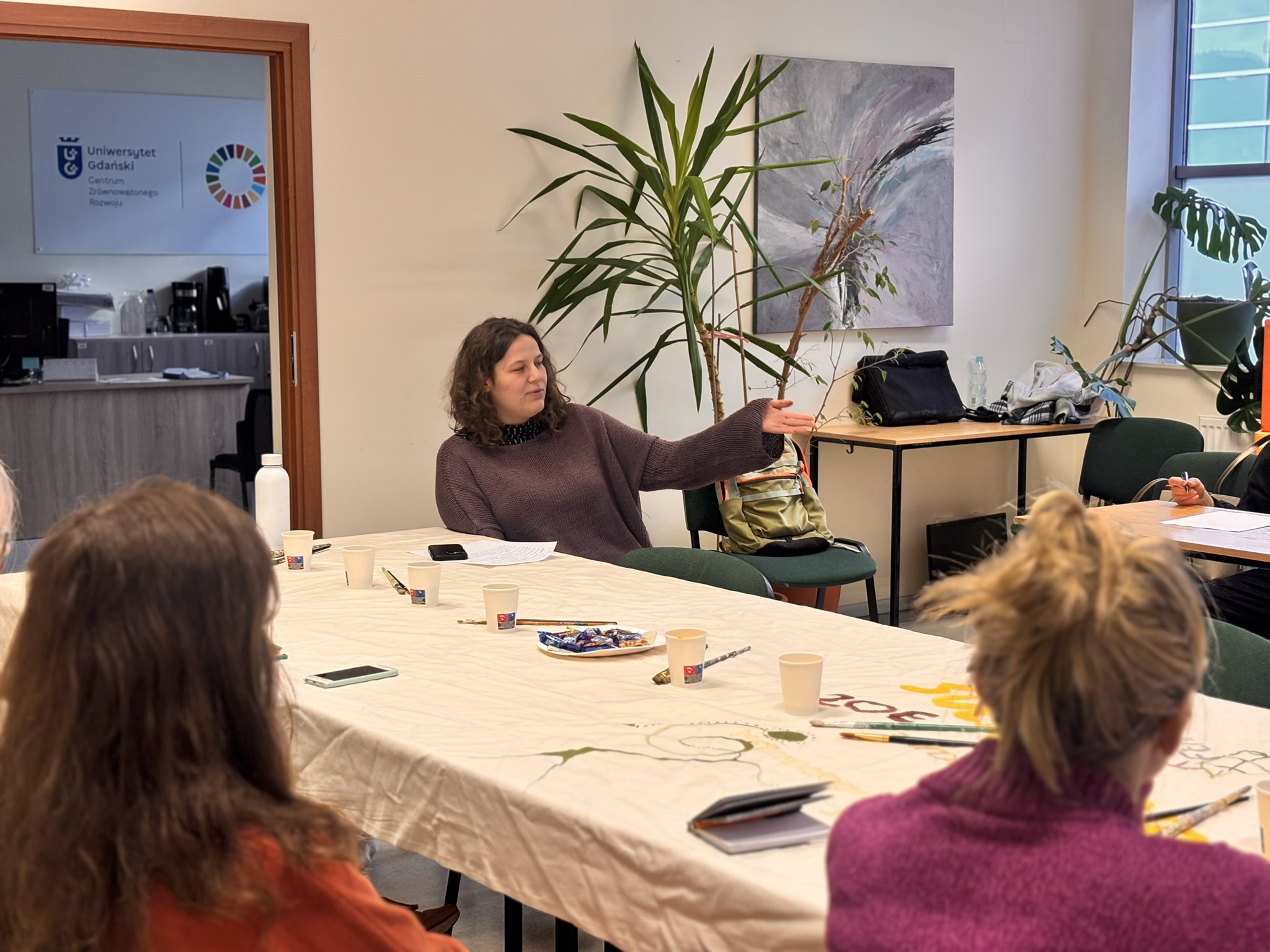
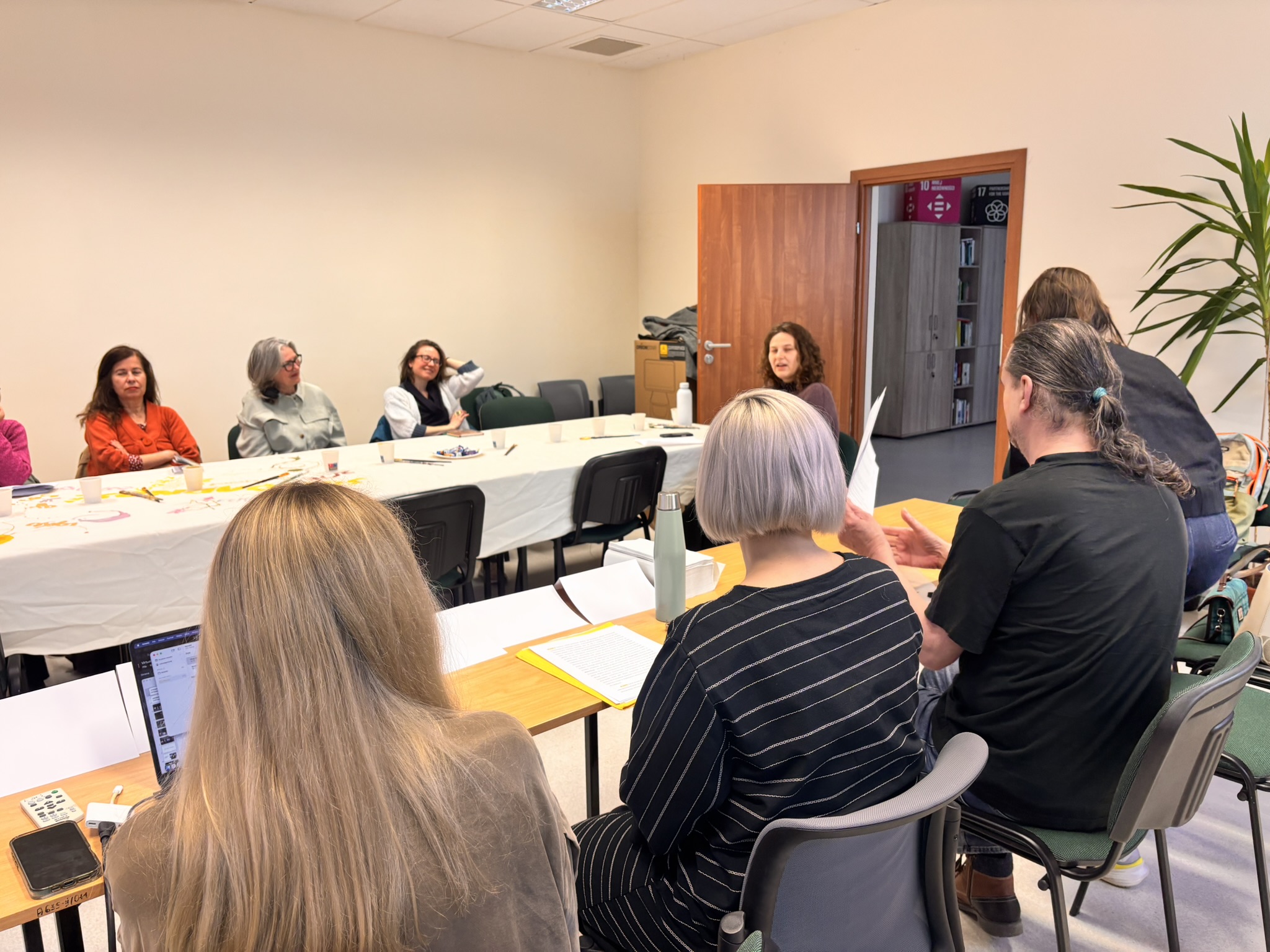
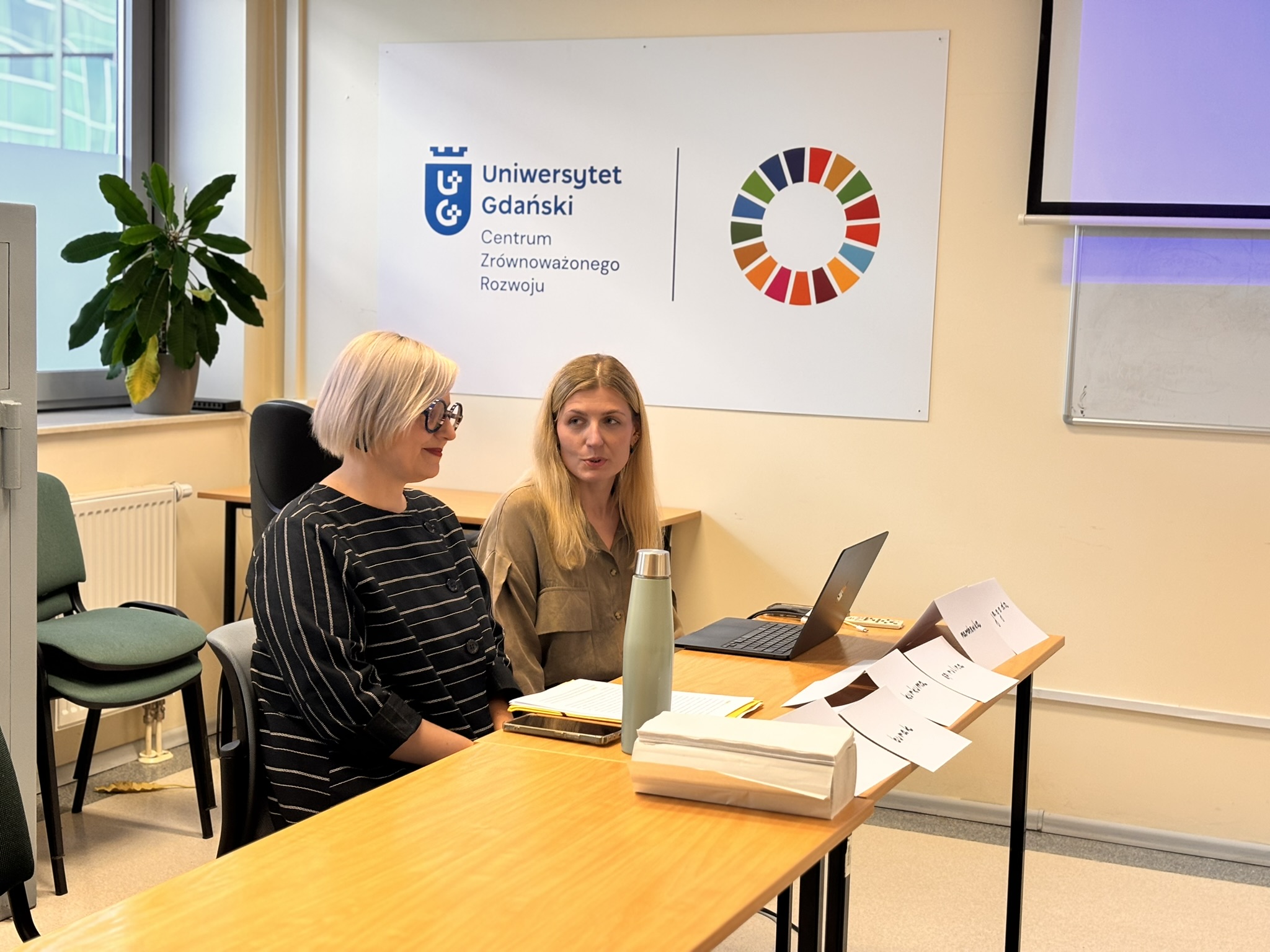
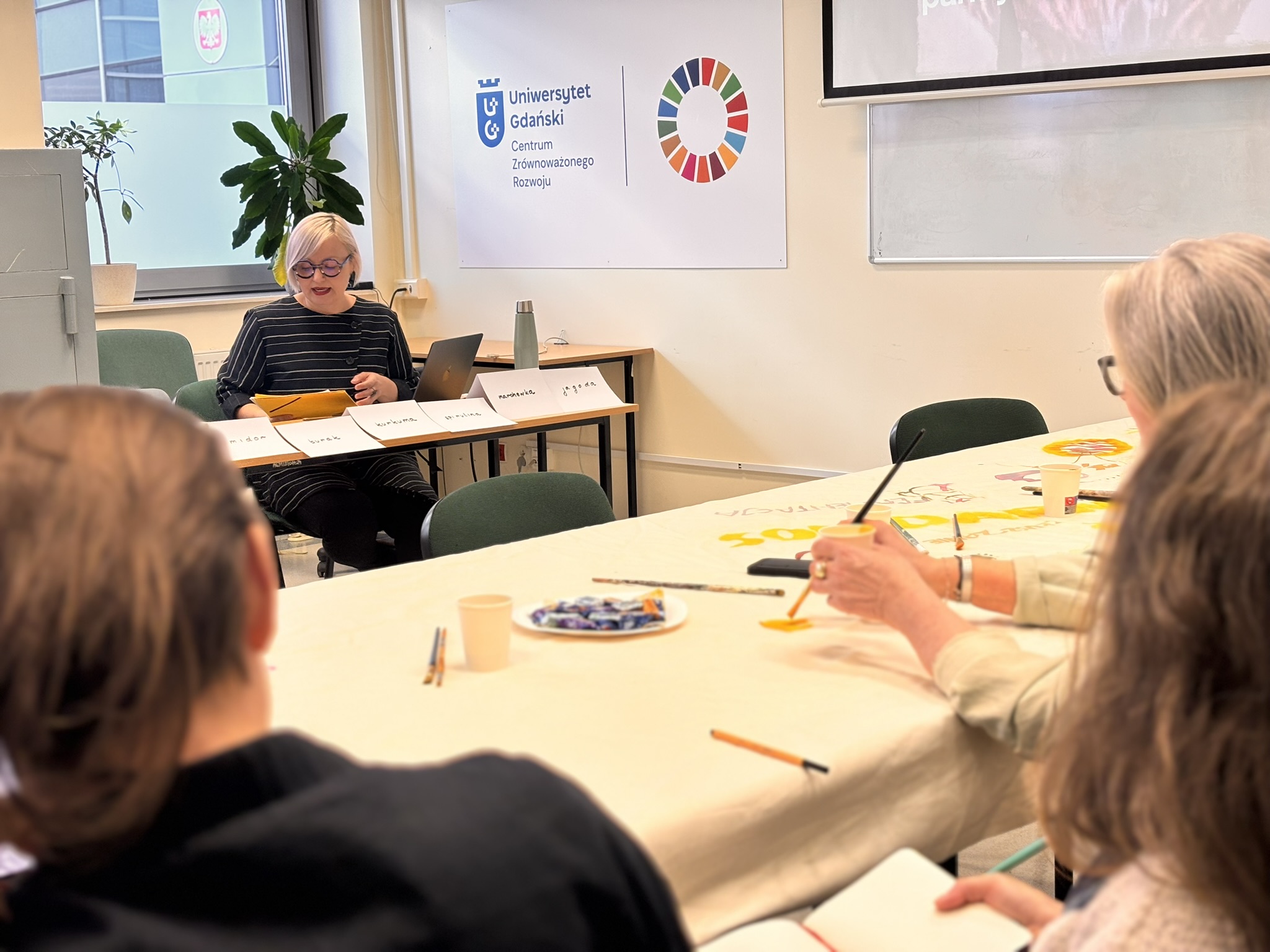
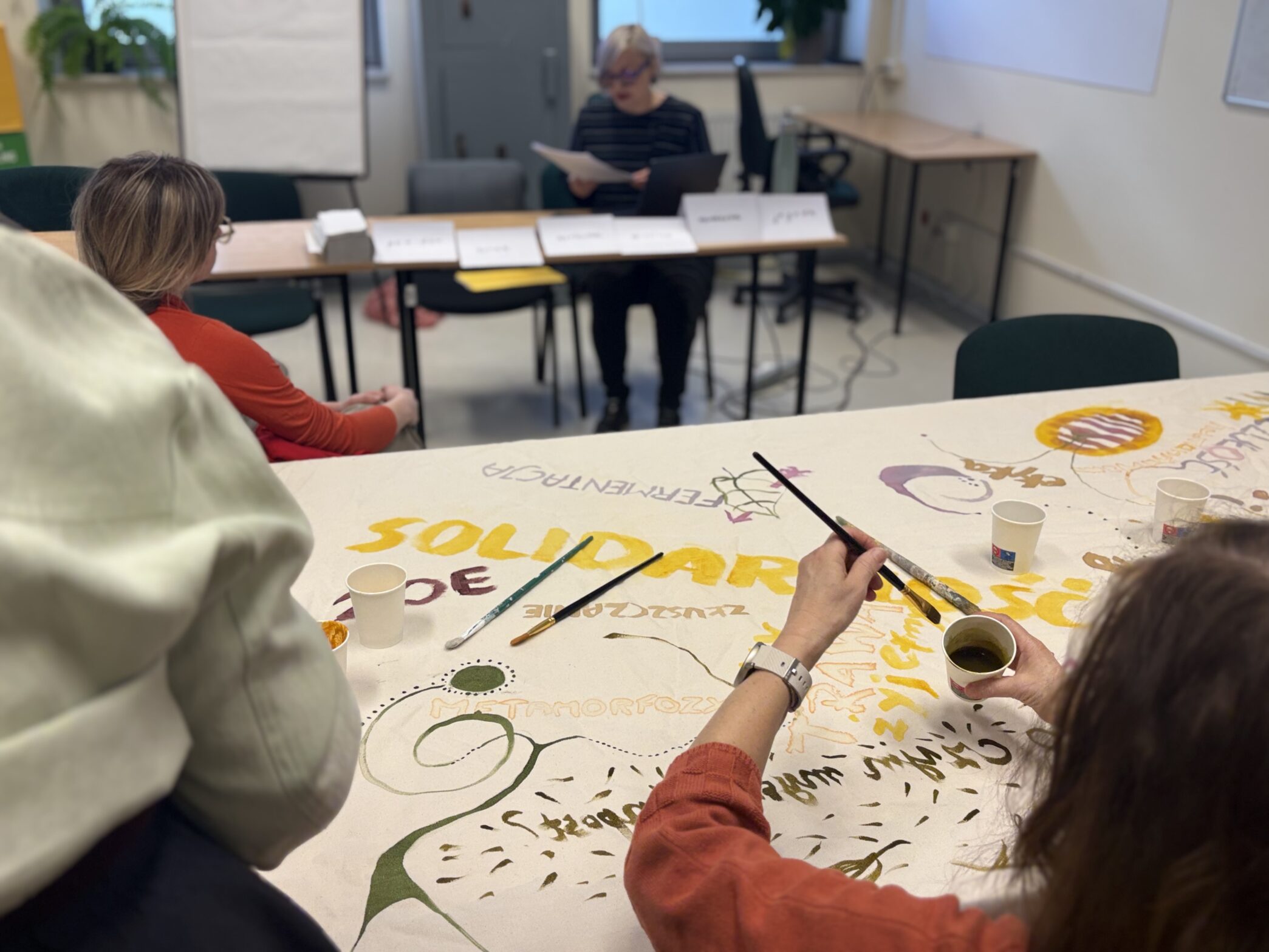
Like the first installment of the series, the meeting took the form of a “long table”—an open and flexible space for collaborative thinking. Participation was not limited to a single format: attendees could speak up, listen, move around, or step back. The key element was the process of joint inquiry—thinking “between”: scales, entities, and languages.
In the second installment of the event, dr hab. Justyna Stępień—a researcher affiliated with the University of Łódź and co-founder of the Center for Posthumanist Studies—shared her perspective. Her presentation focused on contemporary artistic practices in the context of posthumanism and new materialisms, with particular attention to the ethical and political dimensions of art and its role in revealing the relationship between the human and the more-than-human world.
– The meeting with Professor Justyna Stępień at the long table allowed us to explore the tensions between the individual and the planetary – says Dr. Irena Chawrilska, coordinator of the More-than-Human Studies Lab program at the Center for Sustainable Development. – The discussion around exquisitely curated artistic projects, interwoven with a collective act of creation on our tablecloth, evoked the image of Spinoza polishing a lens—holding a microcosm in his hands and contemplating what transcends the boundaries of human cognition, amidst two infinities.
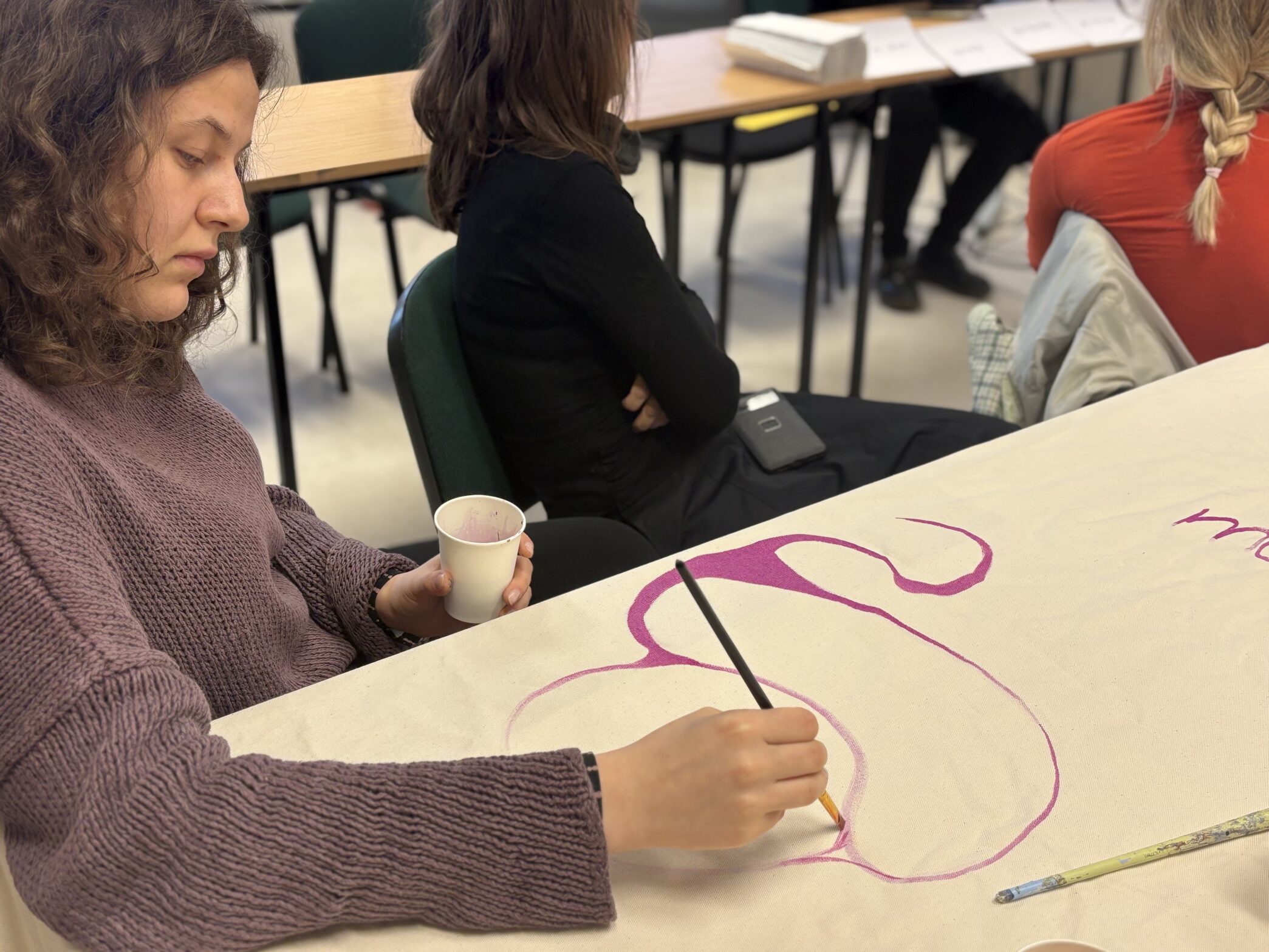
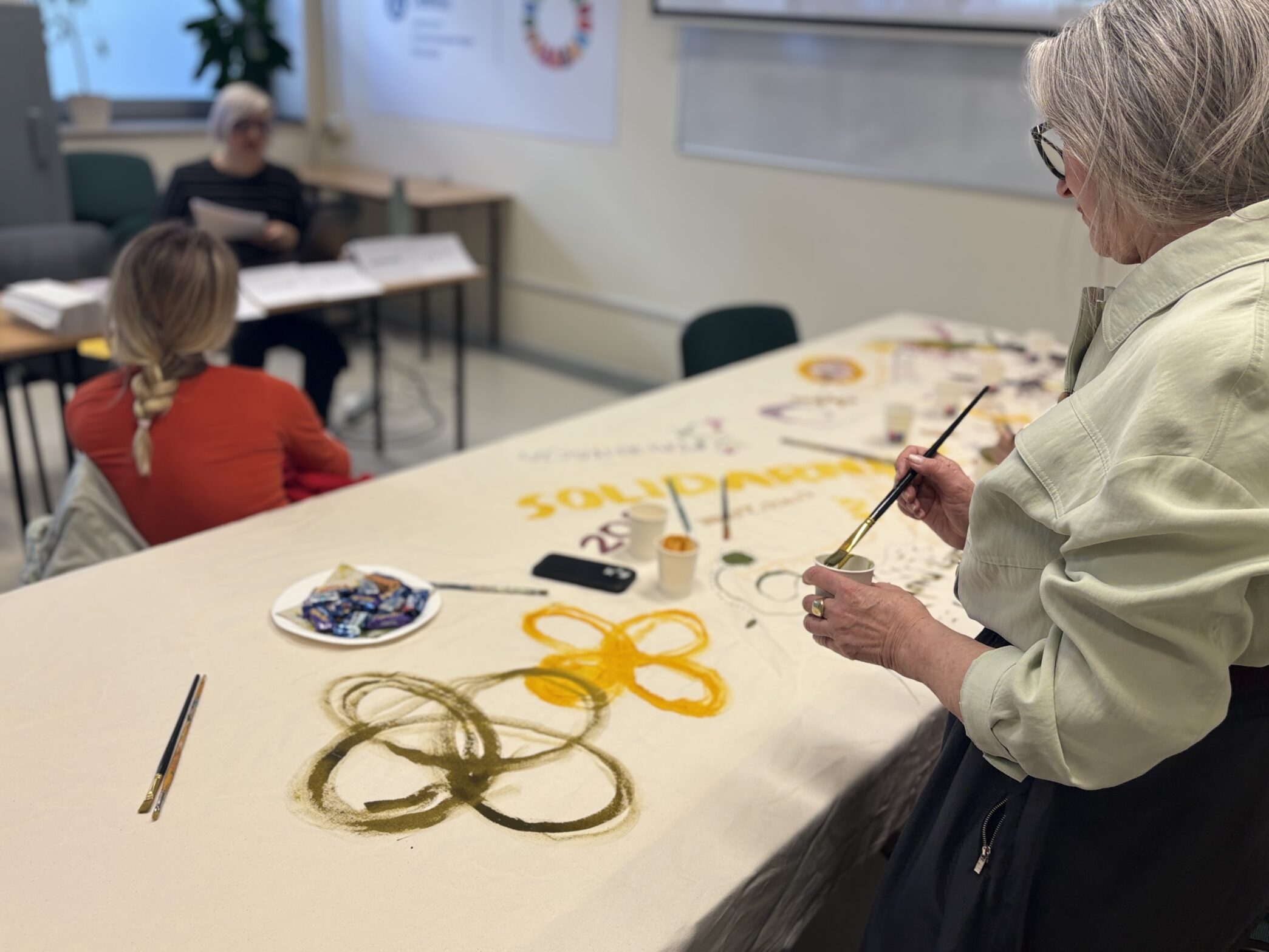
As Dominika Kolenda, co-organizer of the “More-than-human Solidarities” series of meetings, emphasizes, a key element of the experience was the tablecloth as a surface of action, where “drastic magnification” transformed the relationship and enabled haptic cognition, where seeing transitions into touching.
– Natural pigments, spread out and observed under magnification, revealed their material complexity, and their absorption and blending into the fabric’s structure emphasized the processual nature of matter and the relational character of the emergence of phenomena. Thinking with the body, activated through touch and movement, allowed one to grasp the intangible, building a relationship and deepening awareness of the parallels between layers coexisting within a single field of experience – says the artist.
The event was organized as part of the University of Gdańsk’s CZR program—More-than-Human Studies Lab, coordinated by Dr. Irena Chawrilska.